
It's the Little Things
For a writer, the sentence is a right-sized canvas for elegance and power. Paint well.

One musing about storytelling per day (or, more likely, as frequently as I can muster).
Feb. 8, 2026
TODAY, AS WE occasionally will, we begin with a quote.
“One never puts down a sentence without the feeling that it has never been put down before in such a way, and that perhaps even the substance of the sentence has never been felt. Every sentence is an innovation.”
–John Cheever
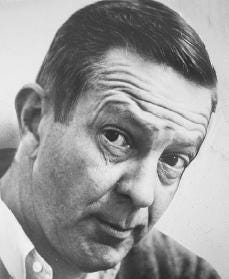
John Cheever wrote trenchantly about American suburbia at its apex, which is also to say he wrote about it at its nadir. A troubled human being (“Aren’t we all?” my dead father’s voice promptly says in my head), he helped perfect one of the finest forms of writing there is — the American short story. And his quote above is worth exploring further.
Often when I’m among writers, something odd will come up in the news — like, say (this is not real), “Two baby seals attacked a wooden beachside picnic table Thursday and ate part of it, another sign that the vulnerable breed of marine mammal is struggling to find food.” Or (equally concocted): “The Dalai Lama will join Tony Danza from ‘Taxi’ and ‘Who’s the Boss?’ on Sunday in presenting the award for Best Sound Design in a Short Documentary.”
“Well,” someone will inevitably say. “there’s a sentence that has never been said before.”
CHEEVER’S QUOTE TAKES it beyond quip. When you’re a storyteller, you don’t just operate in either micro (word level) or macro (idea or document level). Your main stock in trade, I believe, is not words but sentences. They are some of our most powerful tools for originality and impact.
They contain multitudes. They can smack you with their wit, their audacity and their sheer power. They can run on, droning, filled with commas, overstuffed with various varieties of verbiage and self-congratulatory inserts that make them impossible to read aloud, making you wonder repeatedly whether the writer actually intended you to be bored by the time the period appears, if indeed it ever does (or can or will). Or they emerge fun-sized and no bigger than they should be.
They are big enough for creative elbow room but small enough to diagram (though I never did that and wouldn’t inflict that on any would-be writer). They can convey the delights of sound without saying a thing aloud. They can paint a picture without art supplies. They can change the course of mighty rivers of established doctrine. They can introduce you to a story, keep you engaged and end it with elegance and grace. Or, crafted poorly and deployed hamhandedly, they can sink a story that might otherwise have soared.
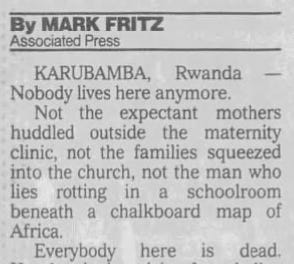
Sometimes sentences are outright lyrical and bordering on poetry and summoning the cosmos, such as what Fitzgerald did here in the famed final line of The Great Gatsby:
“So we beat on, boats against the current, borne back ceaselessly into the past."
And sometimes, the power comes in the simplicity and the context, as in this devastating sentence from Anne Frank’s The Diary of a Young Girl:
“In spite of everything, I still believe people are really good at heart.”
Compact but powerful. One of the things I find endlessly appealing about our world is how certain things can offer such beauty in diminutive packages with infinite variations. I place in that category, among other items: baseball cards, postage stamps, cigar bands, blank notebooks, short stories (as mentioned above) and assorted bagged snacks.
And while it’s a bit zeugmatic in this context, I would add to that roster the not-so-lowly sentence. The heights it can reach, while being such a compact and portable animal, never fail to impress me —and inspire me to do better.
We are all striving to do memorable work that has never been done — or thought of — before. In the age of AI, that mountain has started to grow higher.
The tiny, powerful sentence is a great place to start. And to think about all the time.
And now, Robert Earl Keen.
To Ponder
Think of some of the sentences that have impacted you most profoundly — either as a storyteller or simply as a story consumer. What makes them powerful?
Do some research on “varying sentence structure.” I hope to write about that one day soon.
Pick your favorite sentence from your own writing. Assess its power — how and why.
Bonus
In my never-ending exercise in self-contortion to back up my headlines here with music, a title or lyric with the word “sentence” posed a challenge. As you can see, I settled on something more abstract. But before I did, I contemplated something from a Finnish gothic metal band from the 1990s and early 2000s called — wait for it — Sentenced.
If you’re so inclined, give this song a listen, from their album “Amok.”