
We Built This City
Three ways of telling one tale. The difference: Vision.

One brief musing about storytelling per day (or, more likely, as frequently as I can muster).
May 8 , 2026
MY FATHER KNEW that how you tell a story matters. It matters in how you frame the world around you and how you see your place in it. It matters in how you harness your own ambitions.
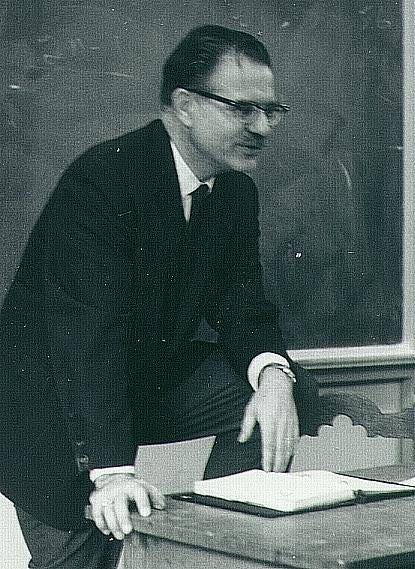
I know this because of a tale he used to tell me — one that he told when he was asked to speak at commencement ceremonies, which was often. He never claimed it as his own, and I’ve seen it in various permutations in other places, but whenever I think of it, his voice is the one that echoes in my head.
Here, from his papers, is how he put it when he addressed the graduates of the University of Michigan’s English Language Institute in 1963.
“You are not just learning about nouns and verbs, pronunciation and vocabulary, although you may look at it in this limited way if you will. ... I exhort you to look at your task with bigger eyes. I leave you with what is perhaps a pertinent story.”
“A man was once walking the streets of a strange city. He saw three laborers working at a construction site. The stranger asked the first, `What are you doing?’ He answered, `I am carrying bricks.’ He asked the second the same question: `What are YOU doing?’ That man replied, `I am mixing cement.’”
“The third man put down his tools and said, `I am building a cathedral.’”
When I first heard a version of this from him when I was a kid, it stuck with me because my father, a professor at the University of Pittsburgh, ran a department on the 28th floor of the Cathedral of Learning, the magnificent Pitt structure that is the tallest educational building in the world. And — for some God-unknown reason that died with him — my dad used to enjoy walking up 28 floors whenever I would go with him to his office.

As I grew older, I understood what my father really meant by this story. Each worker was doing the same thing in the little tale, but each saw it differently. Where one saw the most in-the-weeds task and the second came at it from slightly higher elevation, it was only the third worker who saw what he was doing as part of a larger, more epic vision of human achievement.
The moral: You can be doing exactly the same thing as someone else but be doing it entirely differently at the same time.
This is true with storytelling as well.
I’ve always thought of a taxonomy of storytelling thusly. At the bottom is data, the foundation of all fact-based stories. Just above it is information, which is data put into context. And at the top sits, for lack of a better term, wisdom — the data integrated into information and wrapped in a sense of the larger world and existence. What it all means, if you will.
I was pleased today, starting to write this, when I realized that this longtime view I had about the hierarchy of storytelling mapped almost directly to his little secular homily.
First of all, it’s about vantage point and point of view. These are two similar things that I’ve long struggled to differentiate when it comes to storytelling. But this offers a great case study. For all practical purposes, the three workers are located at the same vantage point — they’re on the same lot, within feet of each other, doing the same thing. But their points of view couldn’t be more different. Each brings a different set of experiences and values to the moment, and it shows. That’s something that, if we think about it in a storytelling context, can be useful in call kinds of ways.
Second, it’s about elevation. Some stories struggle to launch because they are only information. Some are great that way — that’s what they should be delivering. But in others, it’s the wisdom — the context and elevation — that matters most. The worker who is carrying bricks and the one who is mixing cement are literally and metaphorically on the ground floor, and can only see what’s visible from there. The one who looks to the sky and sees the cathedral that will rise is operating from an entirely different elevation, and the story changes accordingly.
Finally, it’s about the “ladder of abstraction,” which I know I keep mentioning because I think it’s so important in conversations about storytelling. The second worker is dealing with the concrete (again, metaphorically AND literally), while the third one is seeing what isn’t there yet but what is looming in the backdrop as the goal of the entire endeavor. As Robert F. Kennedy (the original edition) famously said, channeling George Bernard Shaw, "Some men see things as they are and ask why. I dream of things that never were and ask, ‘Why not?’”
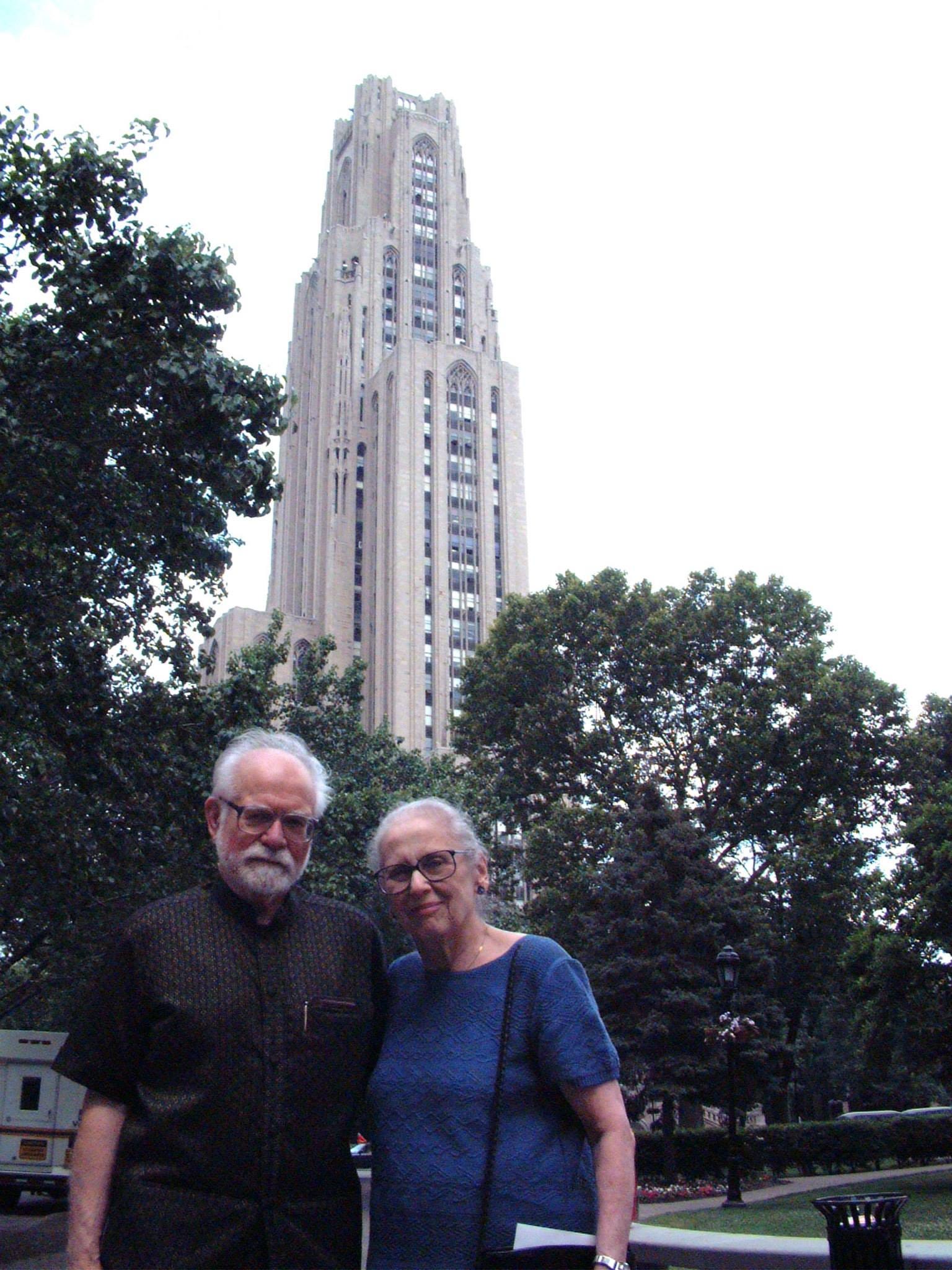
And so, though I don’t think I realized it until now, this tale in my father’s voice continues to echo in my head every day, particularly the line that I suspect was dearest to him:
“I exhort you to look at your task with bigger eyes.”
And now …
Wait. Before the song, I need to offer a mild apology. This is the second time here that I’m quoting a lyric from Starship’s (formerly Jefferson Starship, formerly Jefferson Airplane) 1985 song “We Built This City.” It’s actually the third time, if you count my other Substack, Unsorted but Significant.

Why an apology? Because in certain quarters, “We Built This City” is reviled as the worst song of the 1980s or even all time. I can’t help it: This was popular during my senior year of high school and is a four-decade earworm.
May the universe forgive me.
And now, Starship. You’ll note the haunted look in Grace Slick’s eyes.
To Ponder
Do you think about elevation when you’re crafting a story? What are your approaches to it?
How do you balance the details with the larger themes in your storytelling?
What do you think are some ways to infuse more elevation into stories so they can appeal to wider audiences or resonate more with your current audience?
If you’re interested in reading about how everyday life and unusual things shape us, check out my other Substack, Unsorted but Significant:

Great article. Also great philosophy and life lesson behind your father’s story.