
This Time Tomorrow, Where Will We Be?
The odd art of writing setup stories.


Brief musings about storytelling each day (or as frequently as I can muster).
July 30, 2026
OFTEN THESE DAYS, particularly on digital platforms, we have to write things that will already be outdated when an event begins. But we can’t just stay silent until after it starts. This generally calls for a “setup story” or a “laydown” — something most journalists know well. But like anything else, there’s an art to it.
At the news organization where I work, the 24-hour news cycle has been around since long before any of us was born. Setup stories have been a staple. They used to be part of a group of stories called “PMers,” so named because they were intended for that now largely obsolete beast, the afternoon newspaper. “PMers” often were an innovative way to recap yesterday’s news, or to offer the “laydowns” that we’ll be discussing today, which were designed to look ahead to UPCOMING news that might unfold after the evening paper’s first edition published.
Obviously not all readers of Storylines will face breaking-news situations. But I think the advice is pretty useful nonetheless. Why? Because the culture of currency means that setup stories have uses far beyond fast-moving events, and the skill itself — how to talk about something that’s going to happen before it actually does — is a valuable one to think about in many storytelling situations.
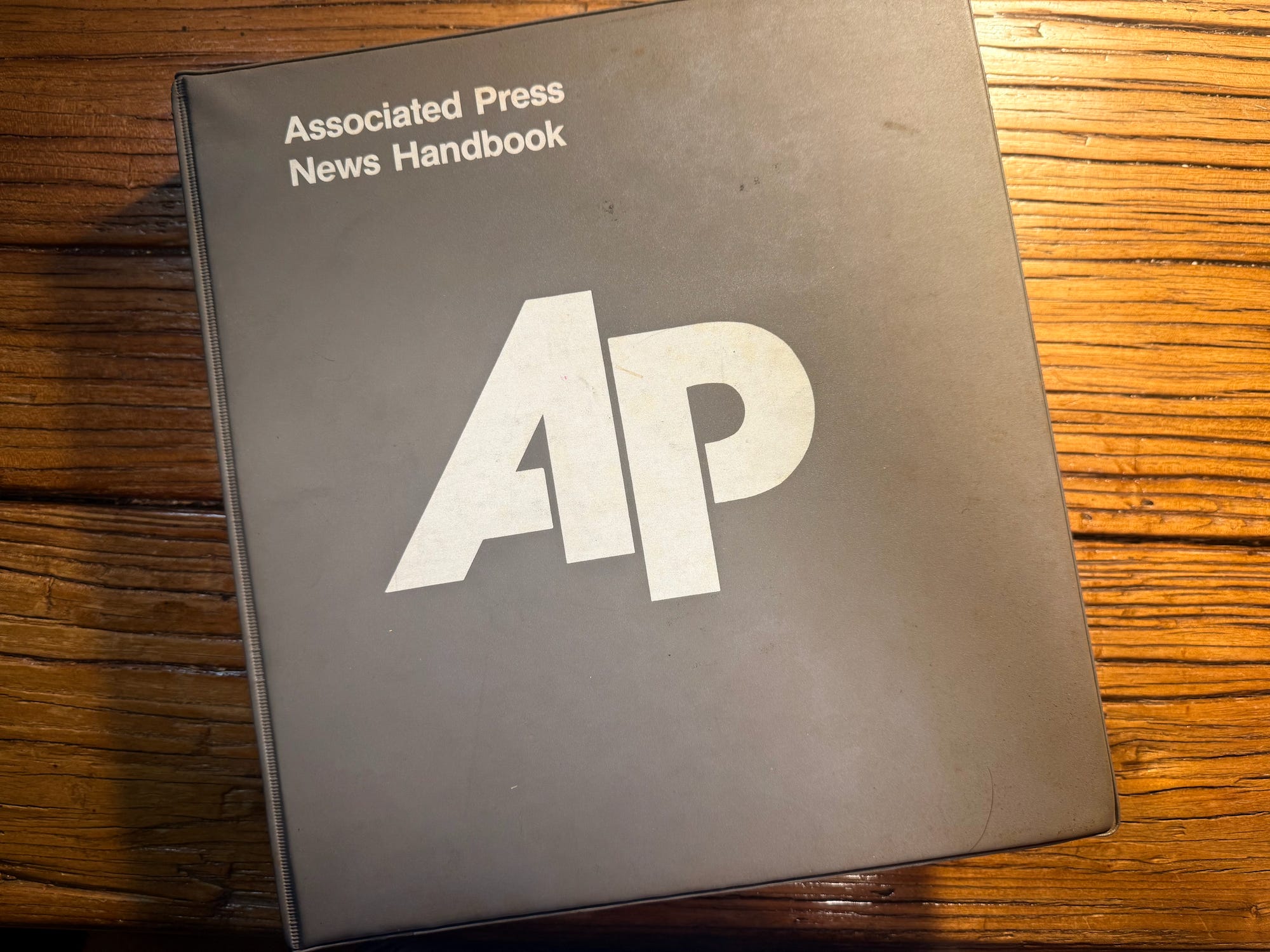
One note: When I was a college student in the late 1980s, desperate to work for the AP, I obtained through a strategically deployed mole within the organization a copy of their news handbook, a three-ring binder that I studied diligently. It had a whole section about “Writing for PMs,” which included material on setup stories that still holds true in today’s moment-to-moment news cycle. And I still have it today! So you’ll see some excerpts here.
With that …
Keep it short. Perhaps the most important one, from my colleague Janelle Cogan. Get the basics in there and a bit more here and there, and then let it go. Why? Because a) you want to save room for the actual developments, and b) depending on the story, much of it may become outdated once the proceedings begin. Says Janelle:
Remember that by its very nature, it will be updated. so keep it relatively tight, straightforward. it may get completely torn up when the news happens, so don't be too attached either!
Keep it modular. This is not the moment for bedsheet prose (for which I have immense affection). Instead, the model should be Legos. By organizing your story in a modular way, you make it easier — for yourself or an editor — to update quickly and effective without dismantling the story to its component parts.
Put meaning and significance front and center. This is not only a trick to get important material out there before anything has actually happened, but it saves you work downstream. Says my colleague Maria Sanminiatelli:
I think my best advice is not to lead with the event happening, but to lead with what is at stake, why do we care, why does this event matter. Keep it short, because it will be updated. But make sure the context is in there because that’s harder to add on the fly.
Here, also from Maria, is a “before and after” of the point she’s making. Note how why it matters anchors the lede, not what’s happening. The first lede is fine, but the second jumps directly to meaning.
Before:
Israeli Prime Minister Benjamin Netanyahu is in Washington early Tuesday ahead of a planned meeting with President Donald Trump — his first since the two leaders launched a joint war against Iran and then split over whether and how to continue the conflict.
After:
Israeli Prime Minister Benjamin Netanyahu’s meeting with President Donald Trump on Tuesday is the first since the two leaders launched a joint war against Iran and a chance for Netanyahu to smooth out strains in their relationship.
Important note from those examples: The first one, while sounding fine, is obsolete the moment that Netanyahu walks into the room with Trump. But the second can be current until we can obtain updates — which could be immediately or could be hours.
Write your “b-matter” and position it separately. This is related to the modular advice above. Some paragraphs — background, context, other things known as b-matter — may not need to be touched if and when developments happen. The more you can sequester those, the easier it will be to update the story.
Along the same structural lines, hint (carefully!) at the things you suspect will happen so that you create placeholders for more material. You can always pull back or delete outdated material in any updates.
AND YET …
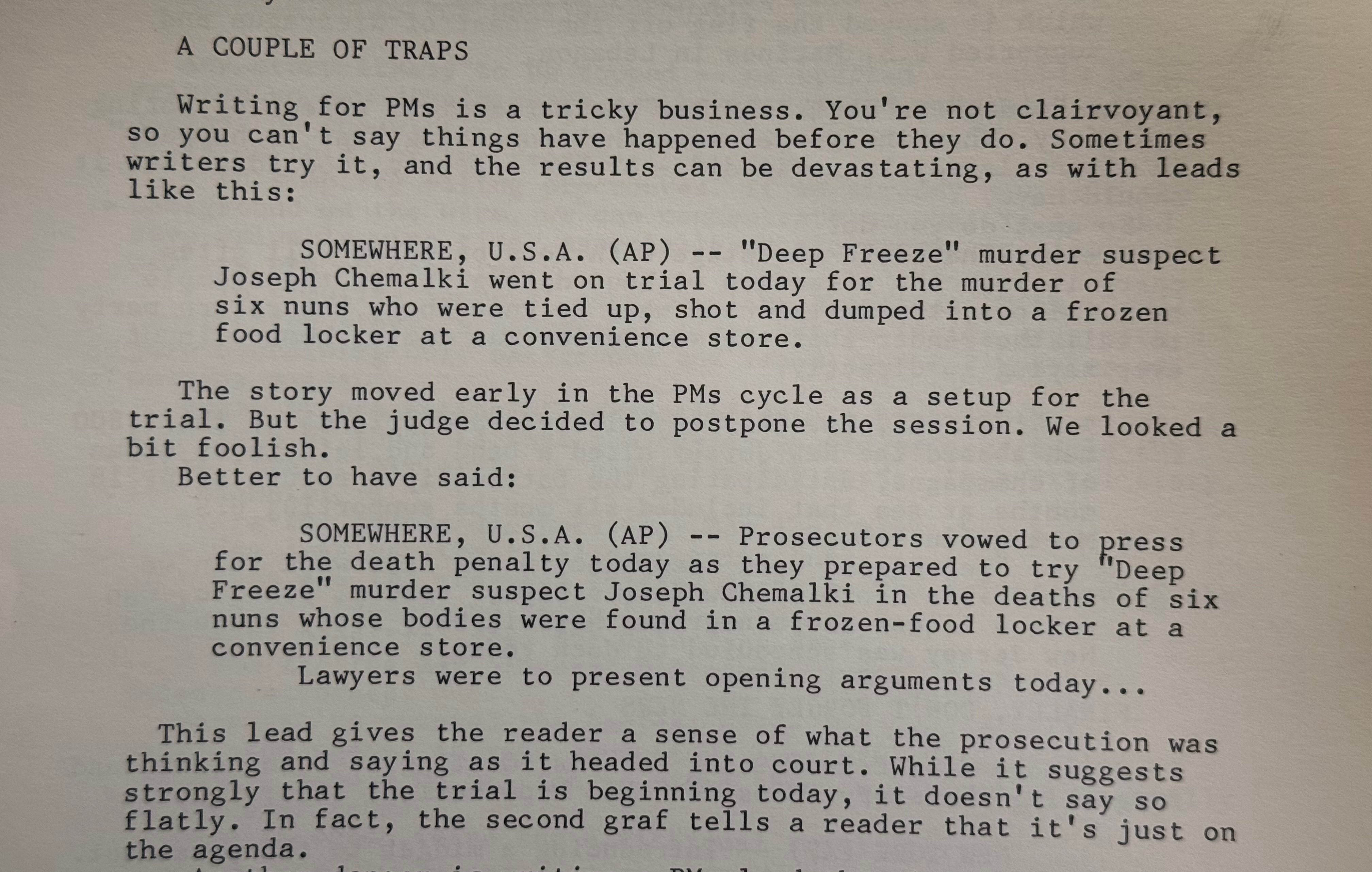
Look ahead, yes, but don’t get over your skis. For example, you can’t say a shareholders’ meeting “began” before it actually begins, stylistically pleasing though it may be. A CEO delayed by traffic could cause a postponement — and even if the meeting starts on schedule, saying it “began” before it did is simply not true. Here’s some 1980s advice on that:
Experiment with the magic time element. If you absolutely need to say “today” or the current day to make things feel immediate, there are ways to do so without creating any kind of inaccuracy. Consider this:
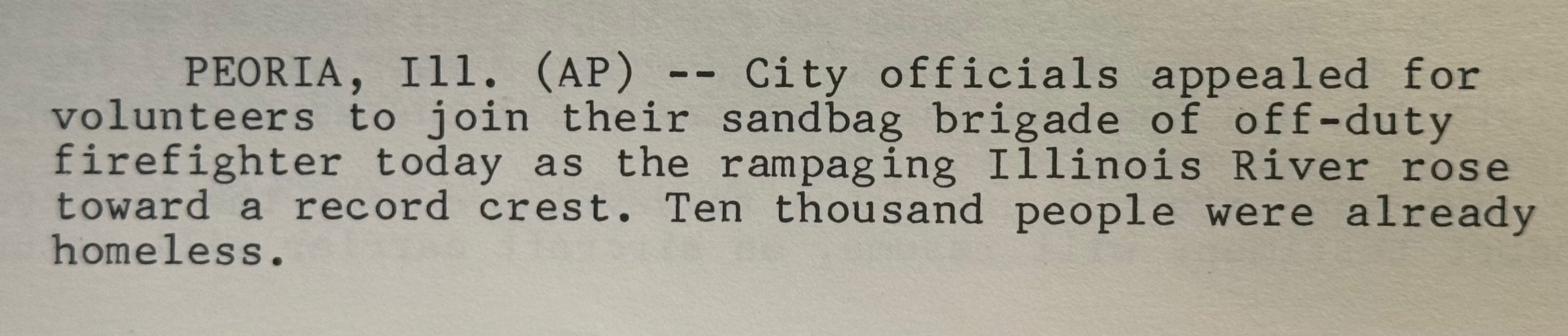
Notice how the “today” cannot be wrong in this instance? The city officials already appealed for volunteers. They could have made the actual appeal last night. But they appealed for volunteers to show up today. So even if everything changed overnight, this lede would not be inaccurate and could “stand” until updated.
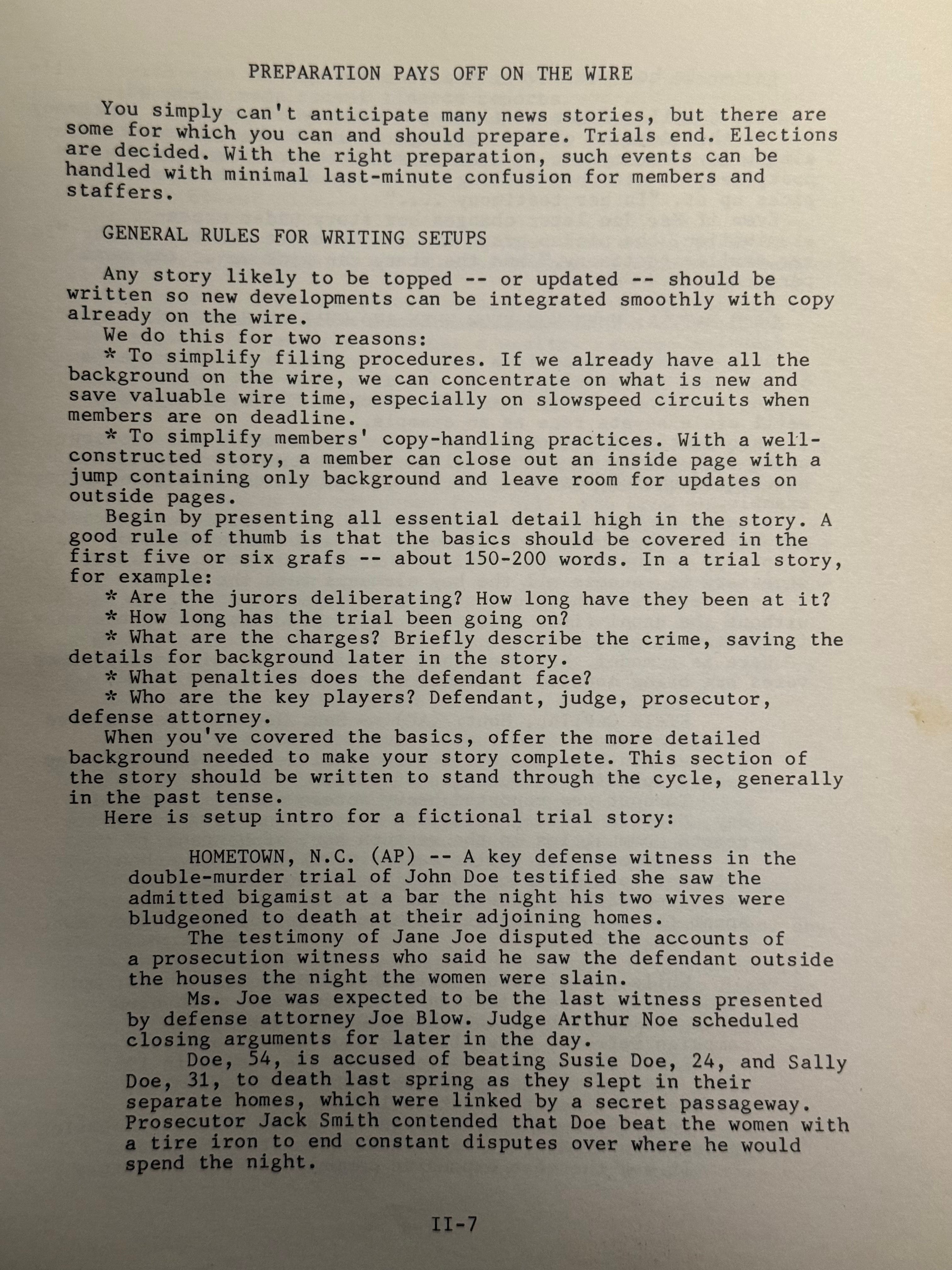
Finally, one last missive from the Reagan era:
And now, the Kinks.
To Ponder
How do you approach a “setup story”? Do you have techniques you find useful?
How might some of these strategies work in other kinds of stories?
If you’re a journalist, what pitfalls have you experienced with this kind of story?
If you’re interested in reading about how everyday life and unusual things shape us, check out my other Substack, Unsorted but Significant:

Great stuff, Ted. For me, the trickiest thing about the setup is the tense. Write what happened and it's old. Write what is expected to happen and you may end up with egg on your face. Writing about why something matters, what Maria suggests, is a great way to solve that. Then the setup isn't so dependent on an action, but rather tells readers why they should care while structurally making it easy for the story to eventually be updated with what happened.