
New Kid in Town
A reporter's guide to arriving somewhere and figuring it out — respectfully.


One brief musing about storytelling per day (or, more likely, as frequently as I can muster).
May 7 , 2026
TONIGHT I HAVE PLOPPED myself down in Bedford, a quiet and attractive little community in the mountains of south-central Pennsylvania. I have done the same thing in countless towns in my career. It is one of my absolute favorite things.
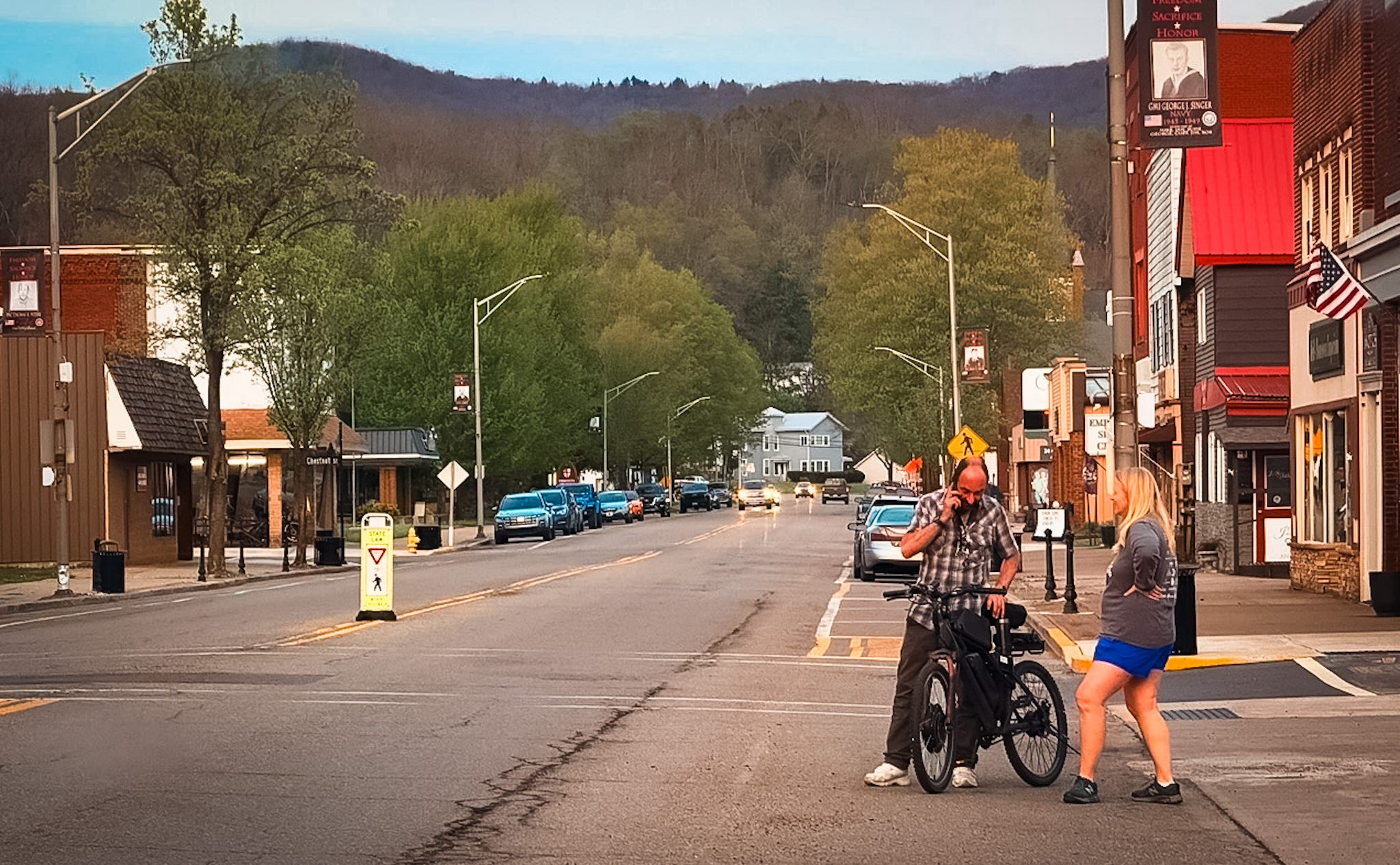
I have done it in Breezewood, 17 miles east of here. I have done it in Coudersport, 149 miles north in Pennsylvania’s northern tier. I have done it in Gusau, Nigeria, 6,630 miles east. I have done it in Wuhai, China, 6,900 miles northwest, and in Nila, Pakistan, 7,140 miles southwest.
I say this not to brag, though I remain quite proud of the stories I did in those places. I say it because in my experience, they share one thing in common: They are towns that I, as a journalist, arrived in with a mission to make sense of something and tell it to others by writing about it. It’s not the easiest thing in storytelling, but for me it’s by far one of the most fun.
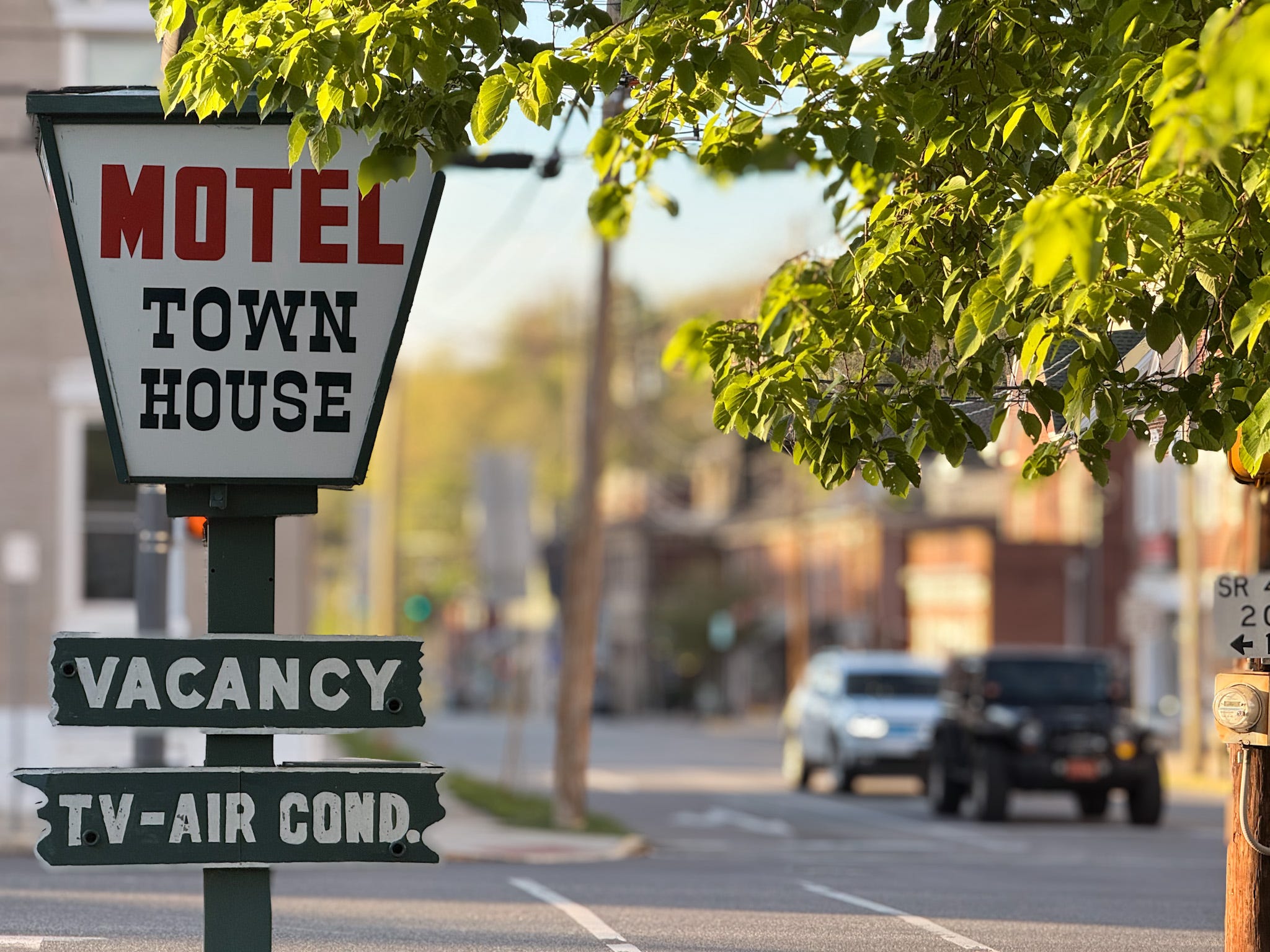
“Town stories,” in fact, are one of the most fascinating subsets of journalism. You come to a town to tell a story, but in doing so you tell the story of the town alongside the story you’ve come to tell. (Gosh, that’s a complex sentence, but I think you get my drift.) In short, the town becomes a character in your story, and characters require development.
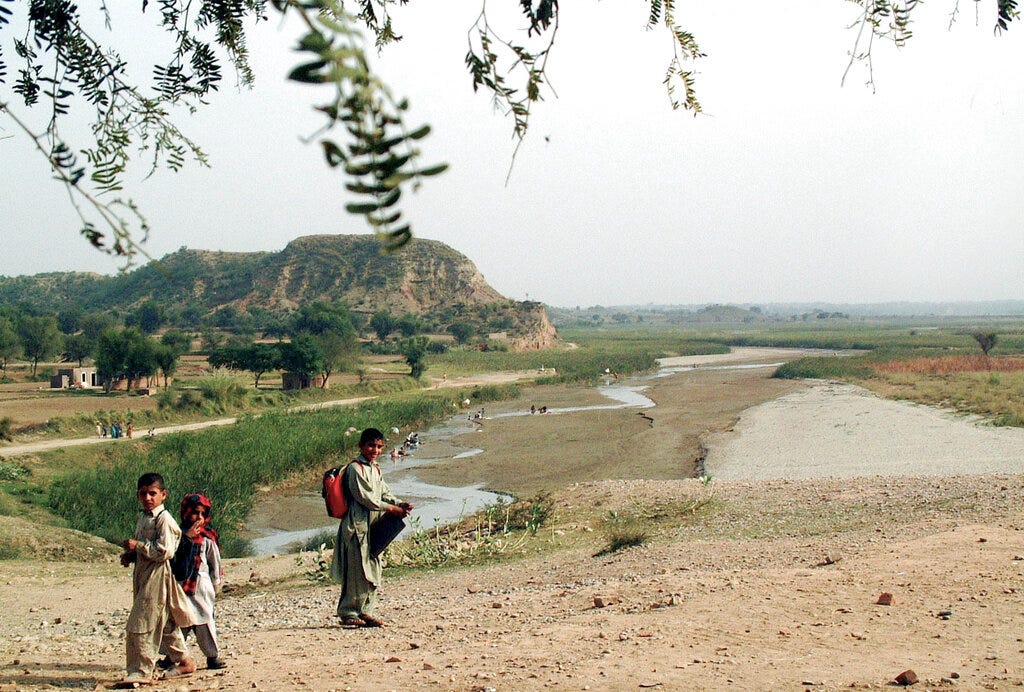
But such stories also pose dangers. “Parachute journalism,” which is precisely what it sounds like, can get things wrong, broad-brush subtleties and — possibly worst of all — amplify and perpetuate stereotypes. One of the worst: the notion that someplace is “flyover country” or “the middle of nowhere.” I have found, without exception and across cultures, that every “nowhere” is someone’s cherished somewhere.
Let’s turn the mic over to, yes, Wikipedia for just a moment here.
Parachute journalism refers to the practice of sending journalists into unfamiliar areas to report on a story in which they have little prior knowledge or expertise. This approach, often used during breaking news events, can lead to inaccurate or distorted reporting due to the journalist's lack of familiarity with the topic, tight deadlines, and reliance on external sources.
Today I wanted to share a few things I have learned and gleaned from all the town stories I’ve done that have been guideposts for me to build the most resonant, textured and respectful stories that do justice to a place that other people call home.
Switch into “absorption mode.” Turn on all receptors. Switch on all senses. Look at manhole covers and the contents of storefronts. Look up which trees line the streets. Consider architecture. Watch people — what are they doing? How are they moving around? What are the street patterns? Where’s the grocery store? Is there hand-lettered signage? What does it say? Perhaps 80% of this will never make it into your story — explicitly. But 100% of it will inform your storytelling.
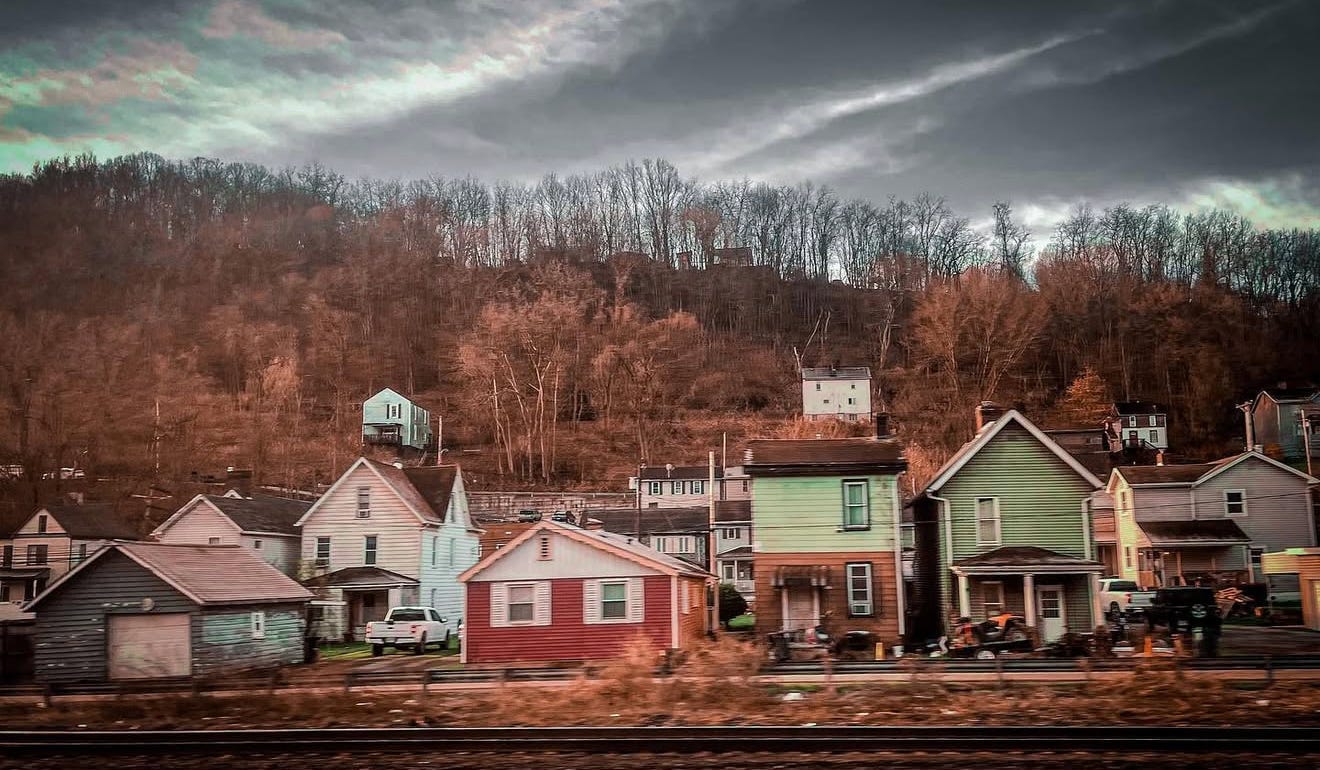
Hit the library or the local historical society. You are not just taking a snapshot of the town. You are trying to understand it — both as a backdrop to your story and on its own. And you never know what you might find. I was doing a story in Coudersport years ago on a small mountain town opening its first McDonald’s and what it meant. At the historical society, I learned that the fast-food restaurant was being built a few yards away from where a man named Nelson Goodsell caught the county’s largest speckled trout in June 1876. In a nature-loving county suspicious of mass-produced food, that was relevant — and made it into the story. If there’s still a town newspaper — something more and more unlikely, sadly — stop by and introduce yourself.
Do extensive backgrounding. Related to the one above. but do it before you go. Yes, the bulk of your reporting will be done on site, but pre-reporting gives you a foundation for what you will see and for who you will interview. There are times — rare times, in my experience — when you want to go in totally cold. But that’s the extreme exception, not the rule.
Take more notes than you’ll ever need. Write ‘em down. Dictate ‘em into a device. Whatever form you choose is fine. But the golden rule is always this: If you notice it enough to take a note about it, your brain is telling you something.

Take visual notes. I take lots of photos on every assignment even if I’m not the photographer for the story. These help me when I go back to write. What color was the grass? Was the sidewalk cracked? What movies were playing at the theater on Main Street? Visual notes help fill out your impression and are great to refer back to when you realize you didn’t write down a detail. This was harder in the era of film cameras; now it’s iPhone-easy.
Challenge your assumptions. Every time you add some sweeping description, make sure it’s about the town and not about your preconceptions.
Interview unexpected sources. All those people you wanted to interview? Great. Do it. But then interview people you might initially think are irrelevant to the story. Reporting for every town story should have at least two or three wildcard interviews that might surface opinions or observations that your “known knowns” won’t.
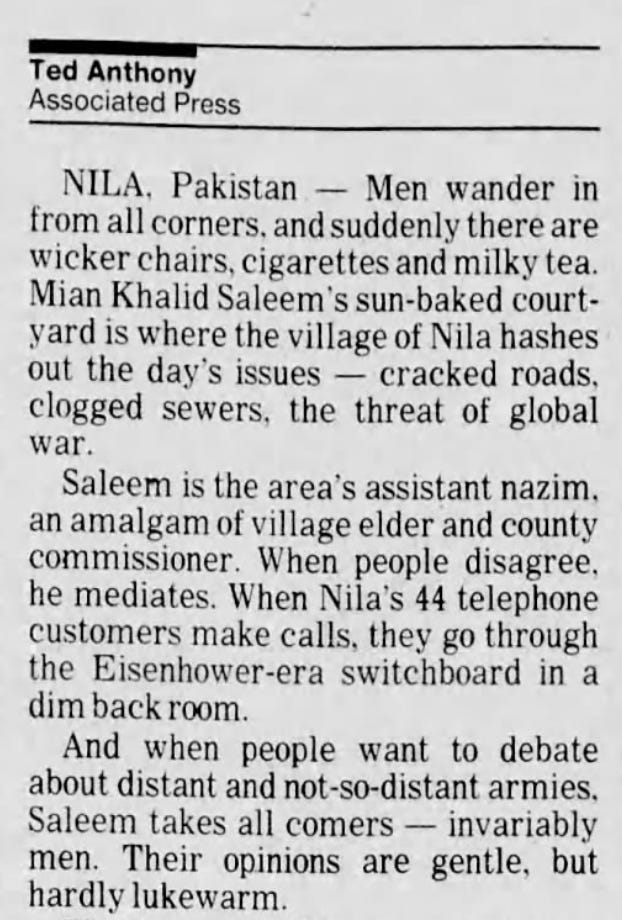
Interview those who know. I’m not saying interview cab drivers (which I have) or town barbers (which I also have). But find the hubs of conversation in the town and go there to ask questions — and, more importantly, to observe and listen. This will produce color, sure, but it will also surface lots of insights. When I went to Nila a month after 9/11, I was the first American they’d seen in town in five years. I quickly found that the courtyard of one Mian Khalid Saleem, the village’s “assistant nazim” (kind of an official elder), was the place where people talked of events of the day. I wangled my way into a chair, and the village — and the story — opened up to me.
Have one foot in and one foot out. The “ladder of abstraction” applies here. Be in the weeds enough to get details and discourage tropes, but also be in the clouds enough to put the town — and the story you’re covering in it — in context. In short: Take advantage of your reporting but also of your status as an outsider, which can be valuable in itself for perspective and elevation.
And finally …
When you get back to your desk, do a “cliché edit.” And preferably do it with someone else who doesn’t know the town. This will help you avoid the “middle of nowhere” pitfalls that have alienated so many small communities when journalists come to town and their preconceptions shape the story as much as their reporting.
I wrote more than I intended to here. Obviously this is an issue near and dear to my heart. As the world leans into becoming more virtual, sense of place and understanding communities where stories happen feel more important than ever.
These are only my observations. I’d love to hear yours, if you’ve rolled into a community to do stories. In the meantime: Respect the places you’re telling stories about. Be thorough. And … go to town.
And now, the Eagles.
To Ponder
Pick your favorite town you’ve spent time in (not the one where you live). How would you describe it to an outsider?
What things do you find yourself wanting to know about places you encounter in stories?
On small towns: What clichés tend to persist?
If you’re interested in reading about how everyday life and unusual things shape us, check out my other Substack, Unsorted but Significant:

Yes! And that’s why your stories have always had the ring of authenticity that the parachute artists lack. I worked for a number of years in Scranton. New York Times or Washington Post reporters would stumble into town periodically to write what we called “grim little city” stories. As in “In this grim little city where nothing good ever happens this correspondent found (fill in the blank).” Our strange customs were described to readers in the manner of Stanley finding Livingston in the jungle. All quite unrealistic. You have provided a good guide on how to avoid that. By the way, I have spent time in Bedford and Coudersport. Pitcairn too.