
Look What I Found
Tiny pieces of storytelling from hither and yon.

One brief musing about storytelling per day (or, more likely, as frequently as I can muster).
Feb. 27, 2026
WE LIVE A LIFE of glorious miscellany these days. Things flood by us in a rushing river of content — people trying to tell us something, show us something, persuade us of something or sell us something by telling stories. It can be dizzying.
My immersion in storytelling — obsession with, some might say — exposes me to all manner of little things that maybe don’t warrant their own close-up shots at the moment but are interesting and perhaps useful in passing. This occasional feature of Storylines will toss some random instances of interesting storytelling — and things about storytelling — your way.
Let’s go.
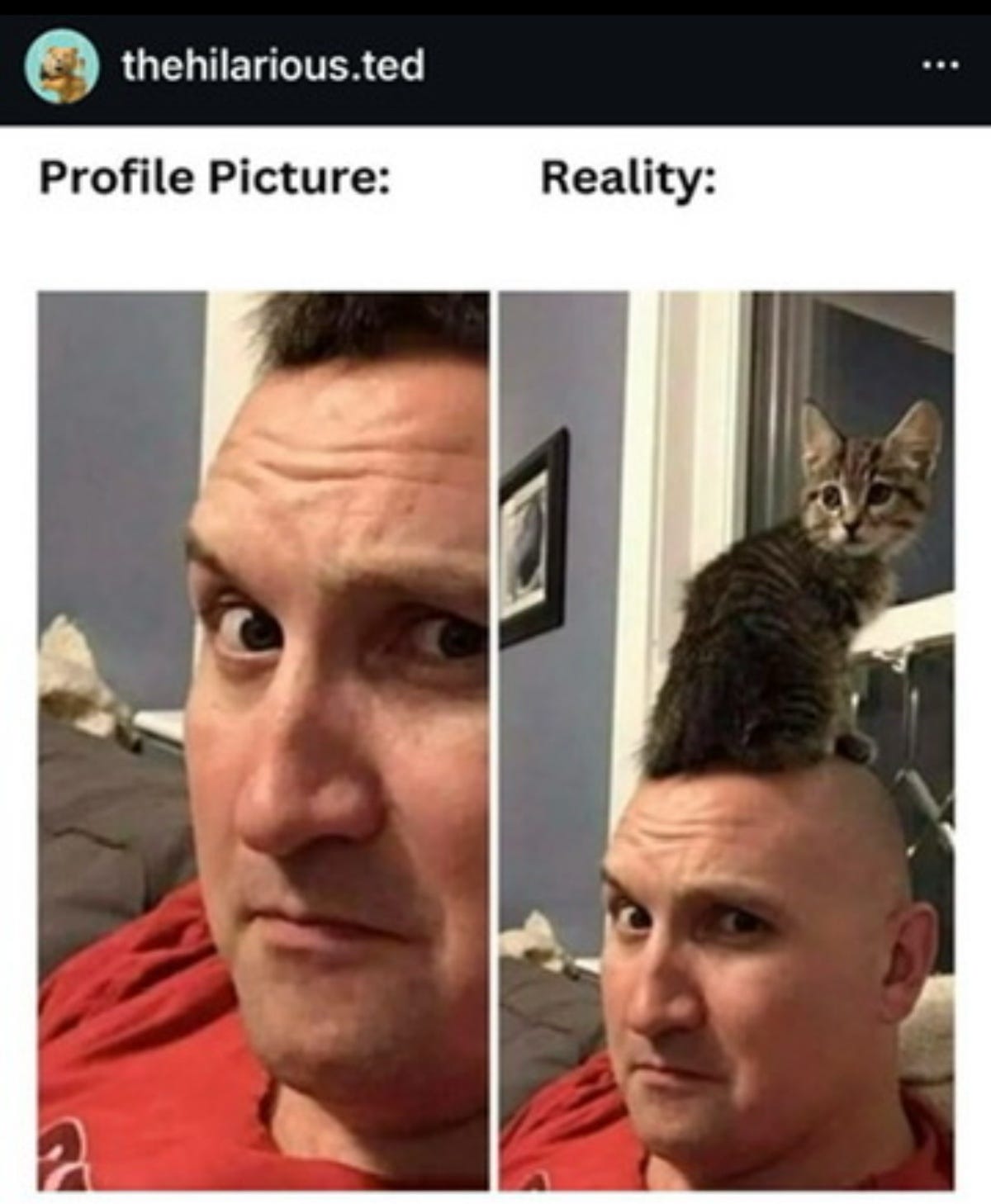
LET’S MAKE IT CLEAR from the outset: thehilarious.ted account that posted this is not me. This at first looks like a meme — and it is — but like so many memes, it also says something larger about how we use information. The crop tells an entirely different story than the full photo. Funny, but also something very useful in thinking about stories and when you show/tell your reader/viewer something.
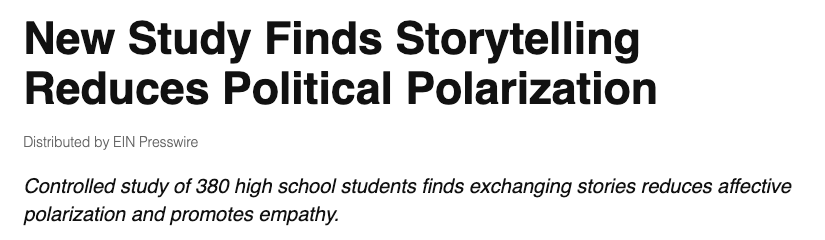
STORYTELLING CAN HELP people under the right circumstances. According to a new study, it can also help them get along by reducing political polarization. After students in a controlled study told stories to one another, the following happened:
“Intervention participants experienced reduced political polarization, with affective polarization toward political opponents decreasing by 4.37%.
Those who participated in the storytelling intervention gained empathy not only toward their classmates (+13.30%), but also toward people in their communities who are different from themselves (+10.62%).
Respect for others in class (+5.40%) and people students disagree with (+7.24%) also increased.”
Unsurprisingly, I love this notion.
AI BRINGS MANY worries along with its ascent, but it also gives us the opportunity to see things in a new light. This is one of several AI-generated mini videos that show what American presidents might look like if they were alive and moving around today. In addition to reframing how they look to some extent, there is something alluring and deeply humanizing about seeing the presidents pass their “real” portraits from one to another down the line. I also like how Grover Cleveland is subtly older in his second appearance.
I HAVE PRO PHOTOGRAPHER friends who dabble in this art of peeling the emulsion of a Polaroid photograph off and placing it atop another to form a composite image. It makes you think of the photographic process, which is revealed quite viscerally in this video. The results are dramatic and occasionally haunting.
THIS IS TAKING those shadow animals we’d make with our hands as children to an entirely new level. The bald eagle in particular is striking.
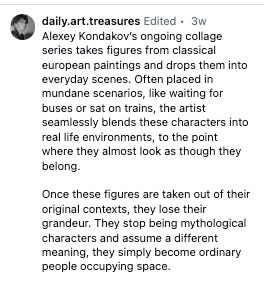
WE END TODAY with collage, a favorite thing of mine because it can mix and remix ideas in entirely new ways. Here’s what figures from classical painting might look like in the middle of prosaic, everyday scenes — with the results being anything but prosaic. I also love the philosophy behind it:
And now, for the second time in a week, Lady Gaga.
To Ponder
Which of these is your favorite? What ideas does it give you in your own storytelling life?
What interesting iterations of storytelling do you come across in your daily life? Send them to me for possible inclusion in a future edition of this.