
Funny Papers
Telling stories by commenting on newspaper comics.


Brief musings about storytelling each day (or as frequently as I can muster).
June 13, 2026
ONE OF MY absolute favorite examples of storytelling that succeeds because it barnacles itself onto other storytelling is “The Comics Curmudgeon.” I’ve been following it for many years. I’m never disappointed.
Basically, it’s a long-running blog in which writer/humorist Josh Fruhlinger turns his incisive and gimlet eye on newspaper comics and comments on them in a “Mystery Science Theater 3000” sort of way, though there are no robots afoot.
What makes The Comics Curmudgeon so regularly hilarious and appealing is that it’s systemically tearing apart the established, generally aggressively centrist narratives of venerable American newspaper comics and — with high dudgeon and great annoyance — holding them to their own rules.
This is not difficult, given that the newspaper strip — now in some ways an endangered breed — frequently contorts itself to make its jokes work and to appeal to new readers while not alienating the ones raised on print editions. Dad jokes? Many of these comics rely on great-granddad jokes. Which gives Fruhlinger a lot to work with.
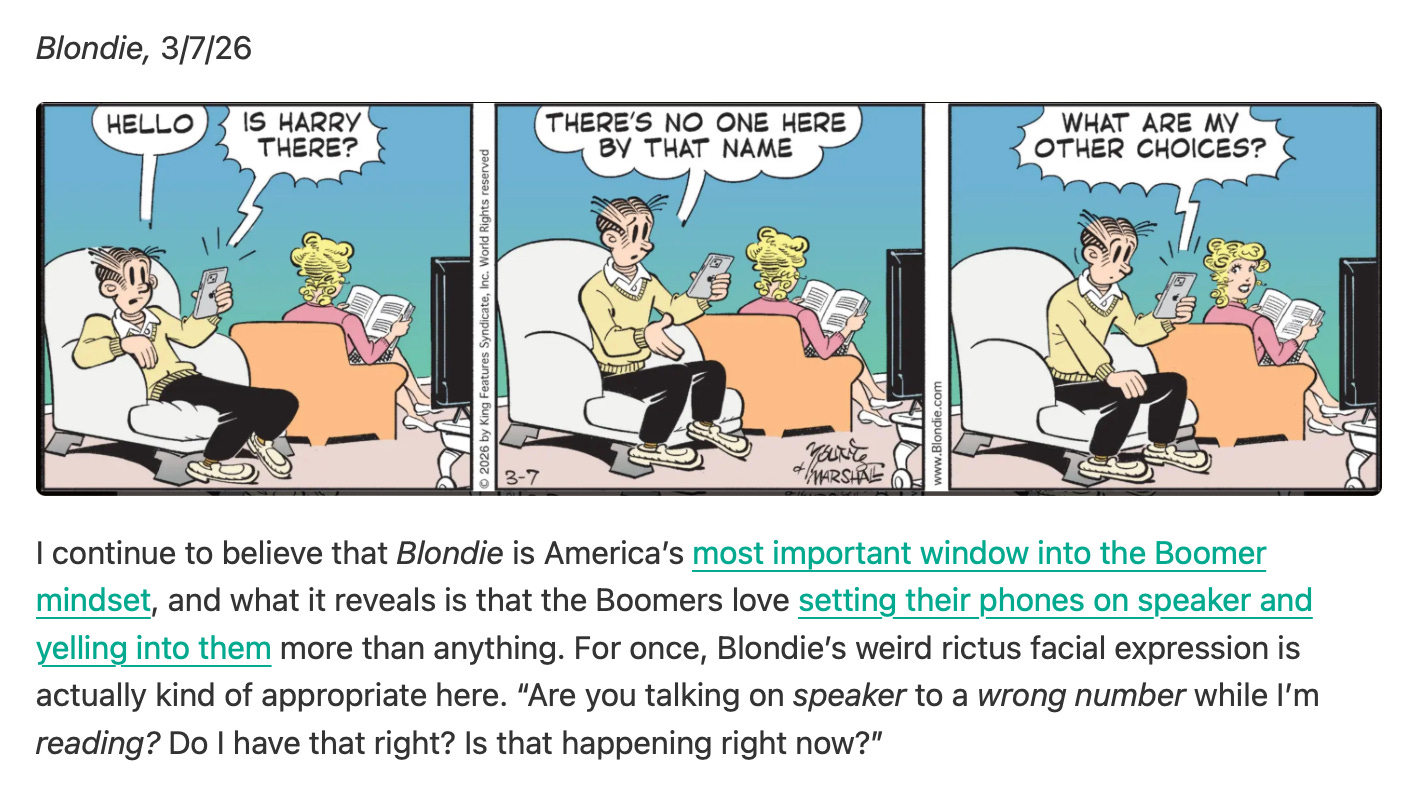
For example, it targets these themes in familiar strips:
Blondie. Many of the entries over the years have examined what simply must be the unhappy state of the Bumstead marriage — something that is never directly dealt with in the strip but, in Fruhlinger’s hands, makes it seem almost obvious.
Beetle Bailey. Similar unlikely interactions are called out as, basically, the ways that no human being in this world would actually act.
Mother Goose and Grimm and Shoe. It’s clear that the Curmudgeon doesn’t much like animals existing like humans without any acknowledgment that they’re animals.
Mary Worth and Rex Morgan, M.D. Fruhlinger saves his sharpest swipes for these “comic dramas,” which often unfold in a way that features actions by characters in which (again, in a recurring theme) they act like no human being on this planet never would.
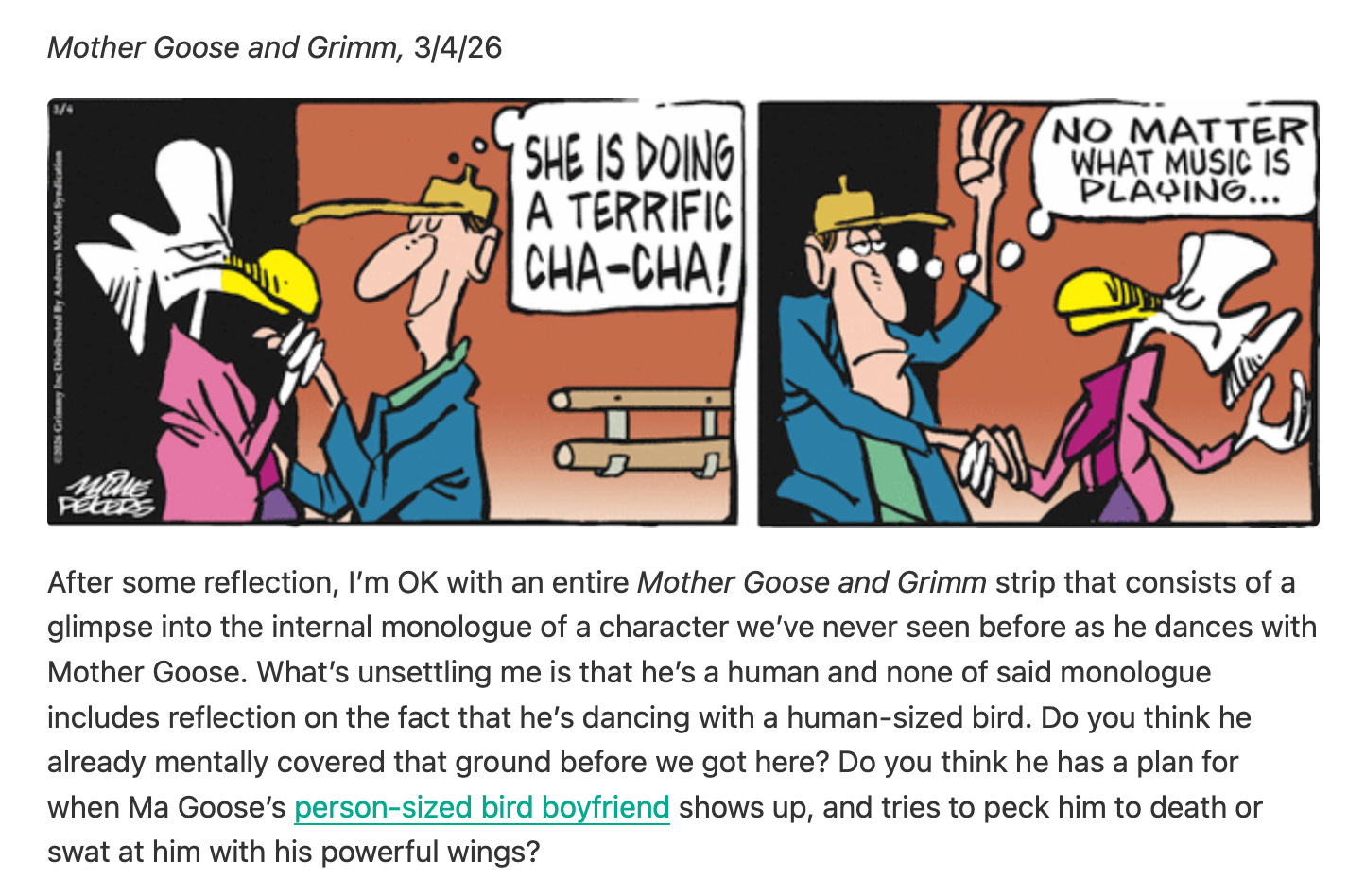
These are fun and the blog is suitable for hours of distraction, so be wary if you’re going to dip in. But the reason I find them interesting (beyond pure humor) is because of how he treats these tiny universes that each comic strip has invented for itself.
For more than a generation now, movie and TV franchises have been building discrete worlds and then trying to remain consistent to them. Fruhlinger uses that constant absence of in-universe continuity as his chief verbal weapon. He takes the discontinuity and absurdity of many newspaper strips and calls them out on the inconsistencies of their own corners of the comics multiverse.
In short, in order to critique their storytelling in a humorous way, he holds them responsible for internal storytelling consistency. And since that almost never truly succeeds in this form, he always finds himself with new texts to skewer.
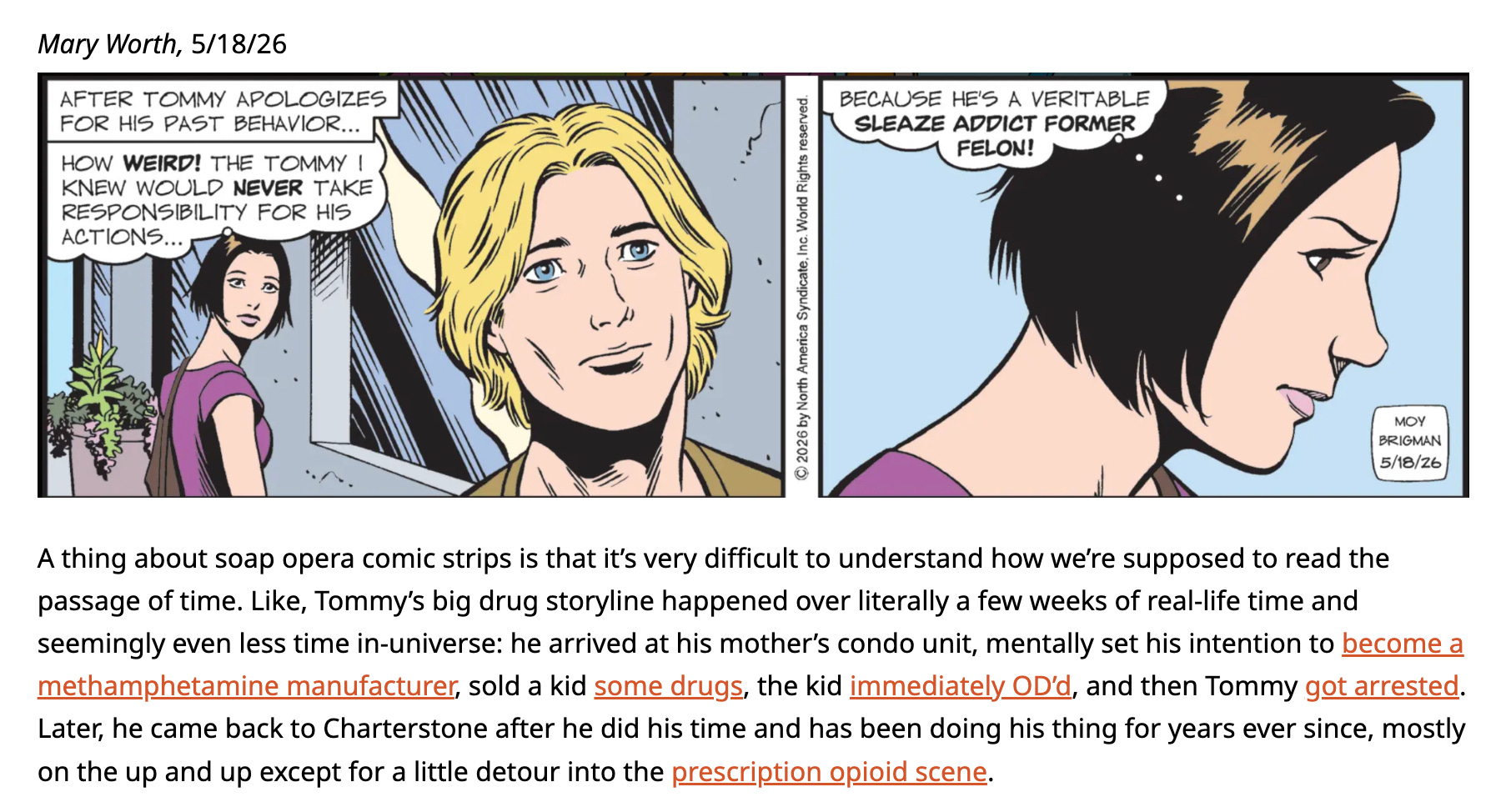
What emerges, if you read enough of the commentary (both with soap-opera strips and standalones), is nothing less than an examination and cheerful takedown of the storytelling tropes that cartoonists rely on to hold things together. And that, in turn, is a master class in revealing storytelling technique.
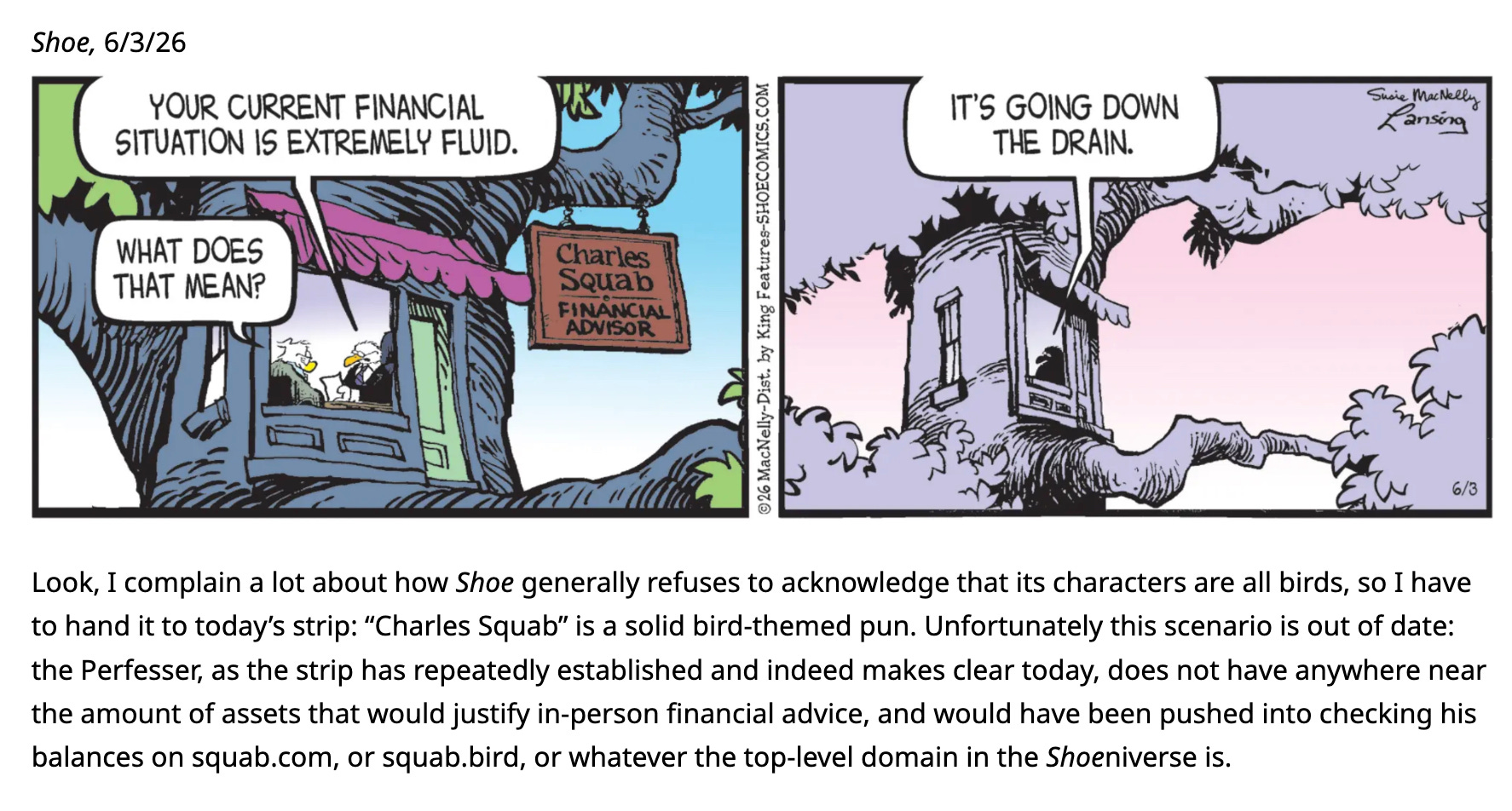
“Pay no attention to the man behind the curtain.” So said a desperate Oz the Great and Powerful in The Wizard of Oz. But peering behind the curtain is the whole point of The Comics Curmudgeon, which manages to be both a really funny blog and a running commentary on the ever-shifting frontier between humor and lazy storytelling.
And now, fellow Pittsburgher Mac Miller.
To Ponder
What other texts besides comics might be fodder for this kind of commentary/storytelling?
Have you ever done a story by annotating something else? What are some of the ways a story like that could work?
If you’re interested in reading about how everyday life and unusual things shape us, check out my other Substack, Unsorted but Significant:
