
Feed Your Head
My father’s random notecards.

One musing about storytelling per day (or, more likely, as frequently as I can muster).
Feb. 15, 2026
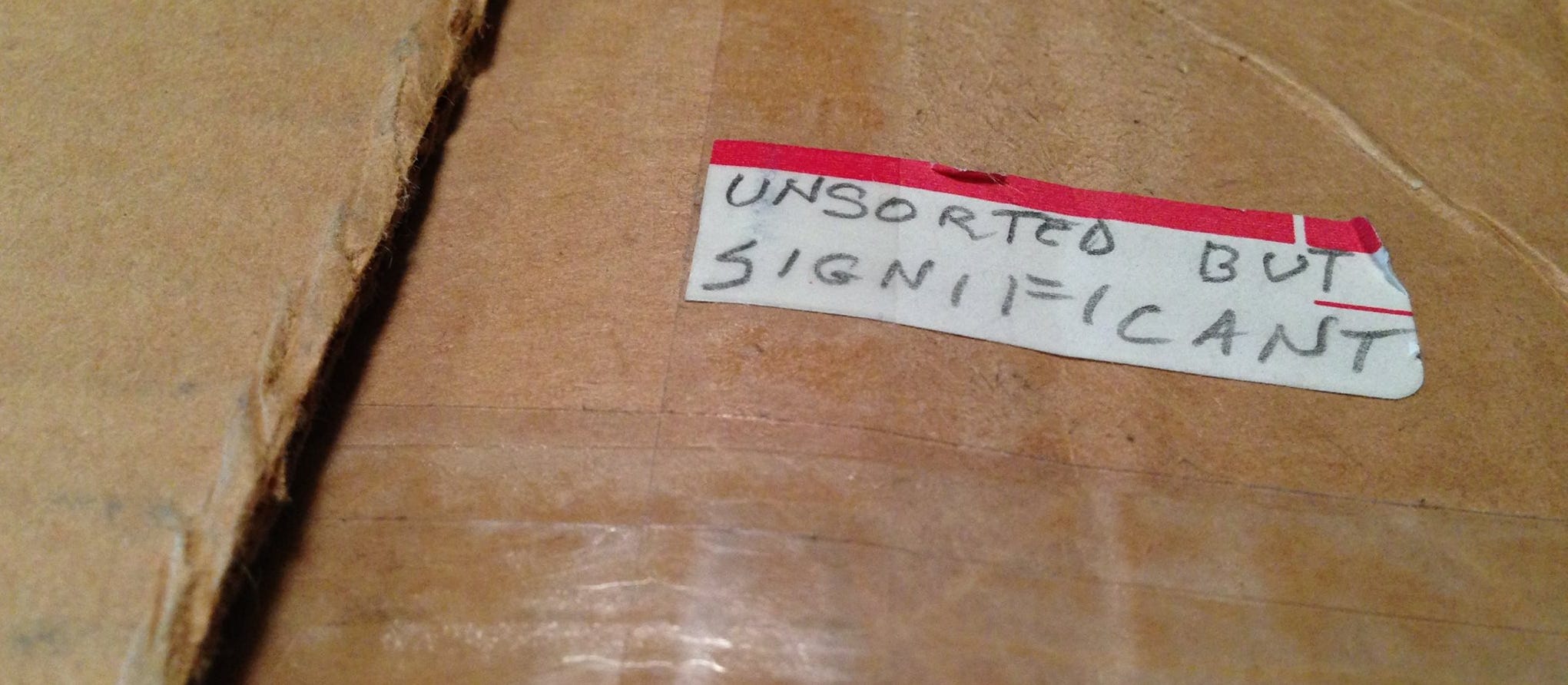
MY FATHER HAD a box that I discovered just before he died, sitting in the recesses of his study closet. It said, simply and in pencil, “unsorted but significant.” That ethos helped push me to start a Substack of that name and, by extension, to this newsletter as well.
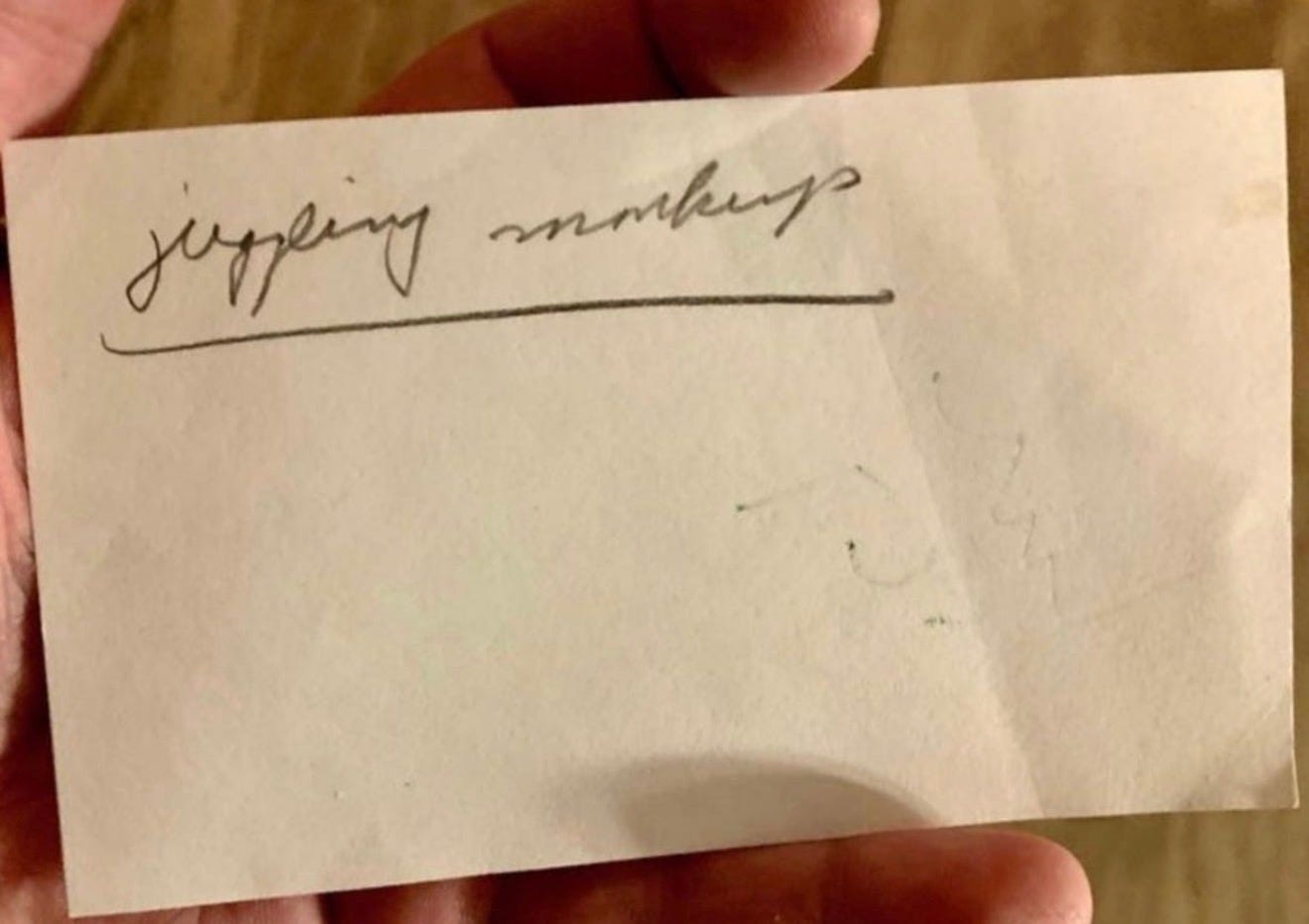
But inside this box (which for purposes vaguely related to avoidance I have not entirely gone through even though more than a decade has passed since his death), there was something even more unsorted than the rest of it: a 3x5 notecard that said, in his inimitable scrawl, two words you never really want to come across: “juggling monkeys.”
Now, of course, we don’t know what he meant by juggling monkeys, and unless there’s an afterlife he will never tell.
The point, though, is not the inscrutable simians but the card itself — and its continuing existence. In an era when computers were not yet in your pocket, or even on the top of your lap, these cards were his portable database of all the things our apps store for us now.
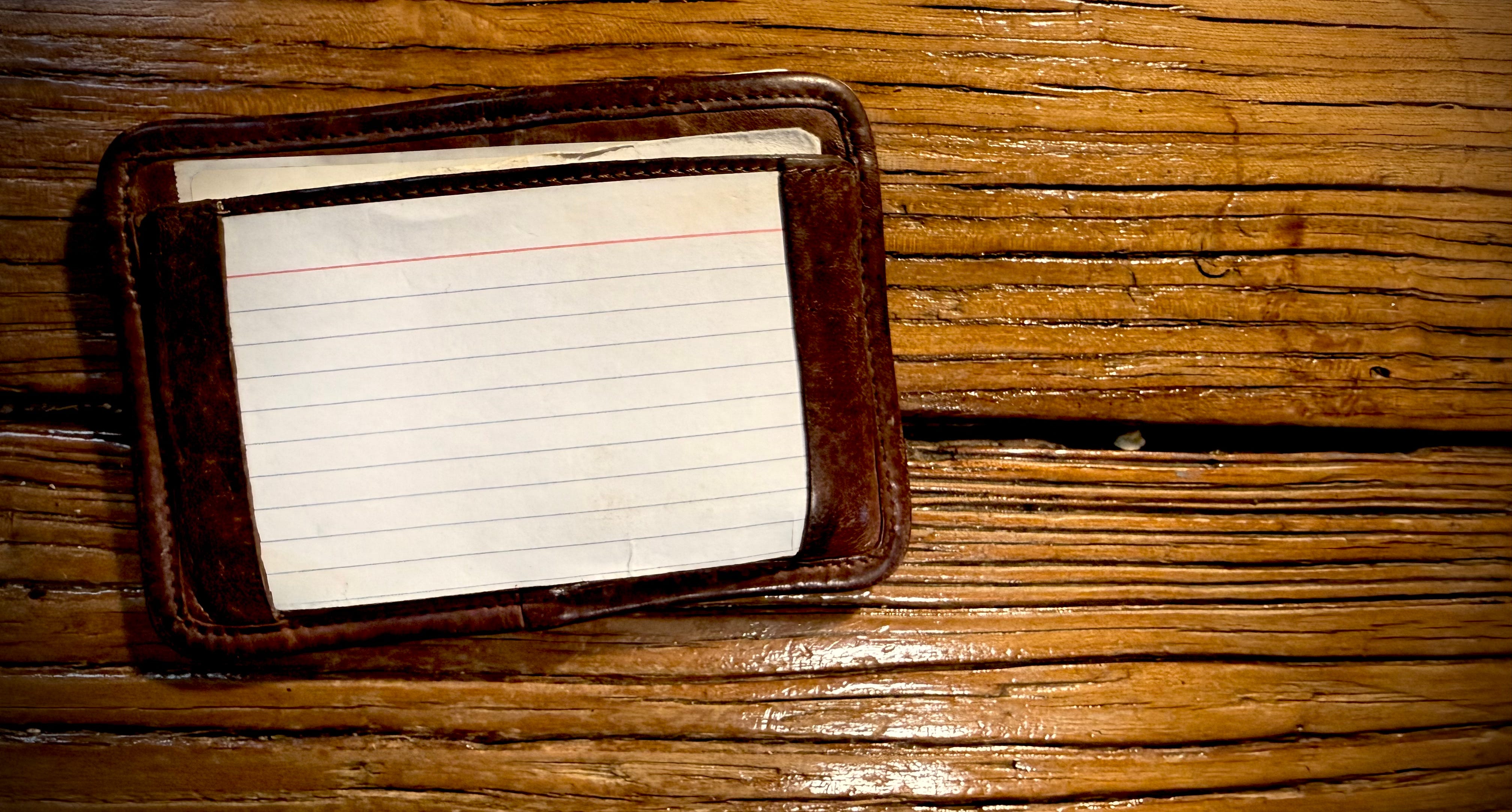
My father was never without notecards — what he called “3x5 cards” — and a pen stuffed in his collar. This morning, I pulled out one of the more than a dozen leather and leatherette notecard folders he left behind (above) and slid out the contents — brain droppings if there ever were such a thing.
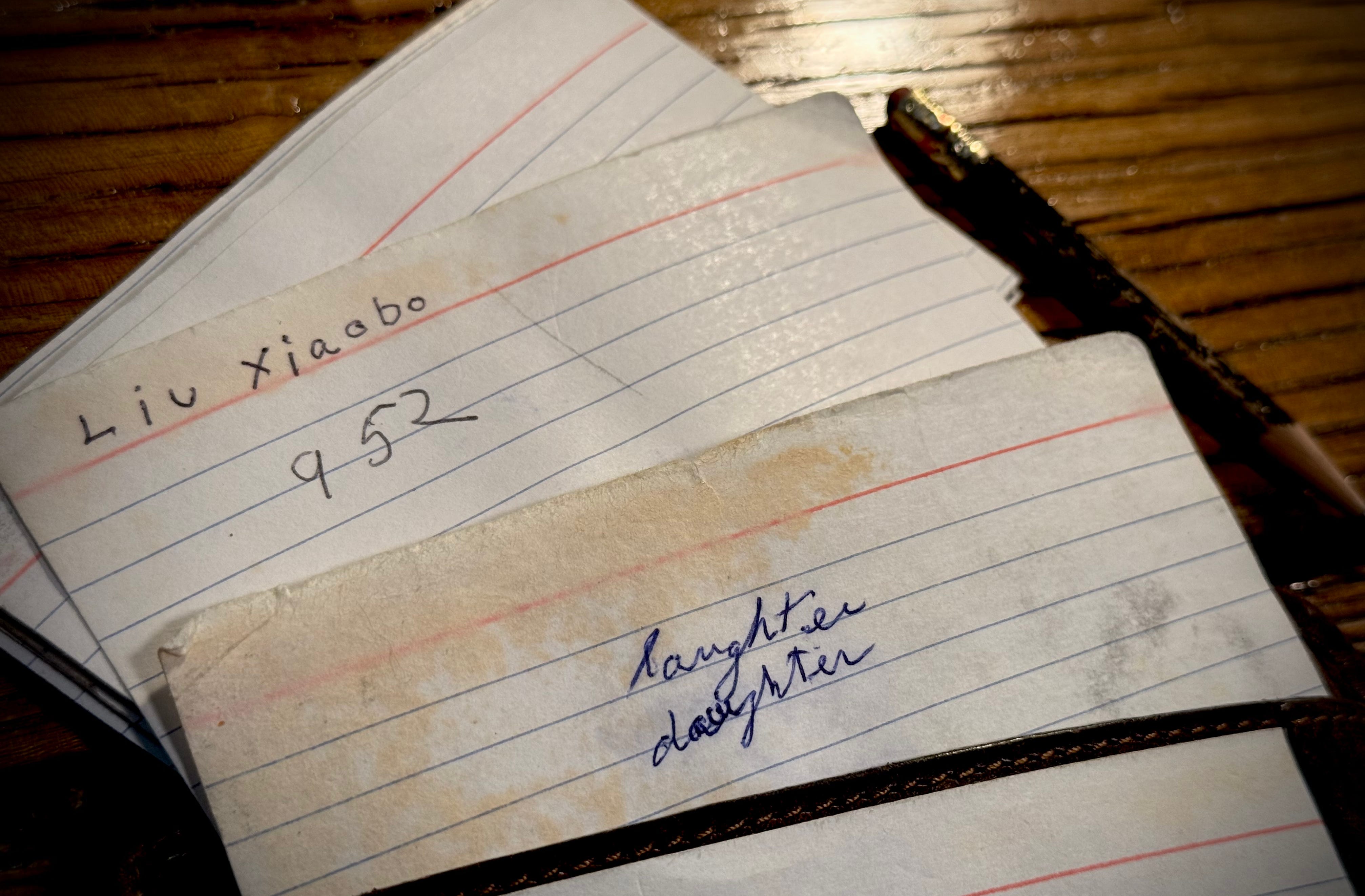
I found a bunch of dog-eared cards carried around but destined never to be used, and two with important inscriptions. The first was in pencil, printed:
Liu Xiaobo
952
The second was in pen and more emphatic:
laughter
daughter
These made sense. The first is the name of a Chinese literary critic and activist who participated in the Tiananmen protests and died in 2017, two years after my father. The second is a comparison between two English words that should be pronounced the same by all rights but are not.
My father was a China guy and a linguist. So these are microscopic slivers of his daily thoughts. Perhaps they are not valuable on their own, but they are tiny glimpses into what he was pondering, even if only fleetingly.
It’s that last sentence I want to leave you thinking about. My father was NEVER not ready to take notes. I can’t tell you how many times as a kid, with height that came up to his chest, I would go in for a hug and my cheek would collide with a notecard holder and pen, sometimes tucked into his shirt pocket under a pullover sweater.
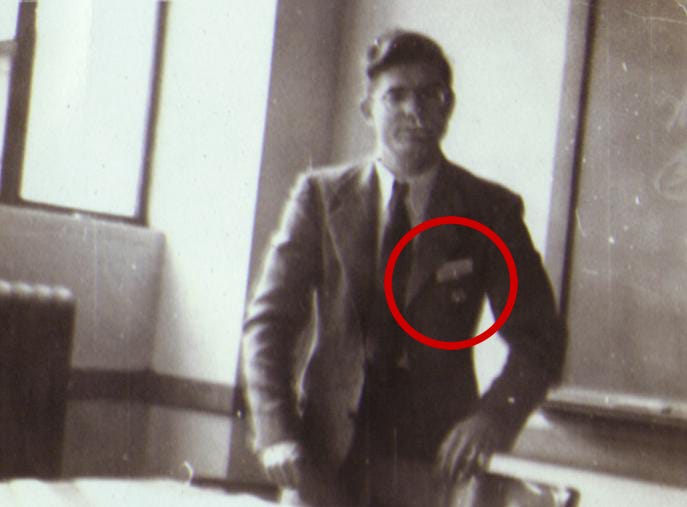
You can see that here. A photo I have of him teaching in 1946 or so shows what I believe to be the earliest photographic evidence of his ubiquitous 3x5 cards.
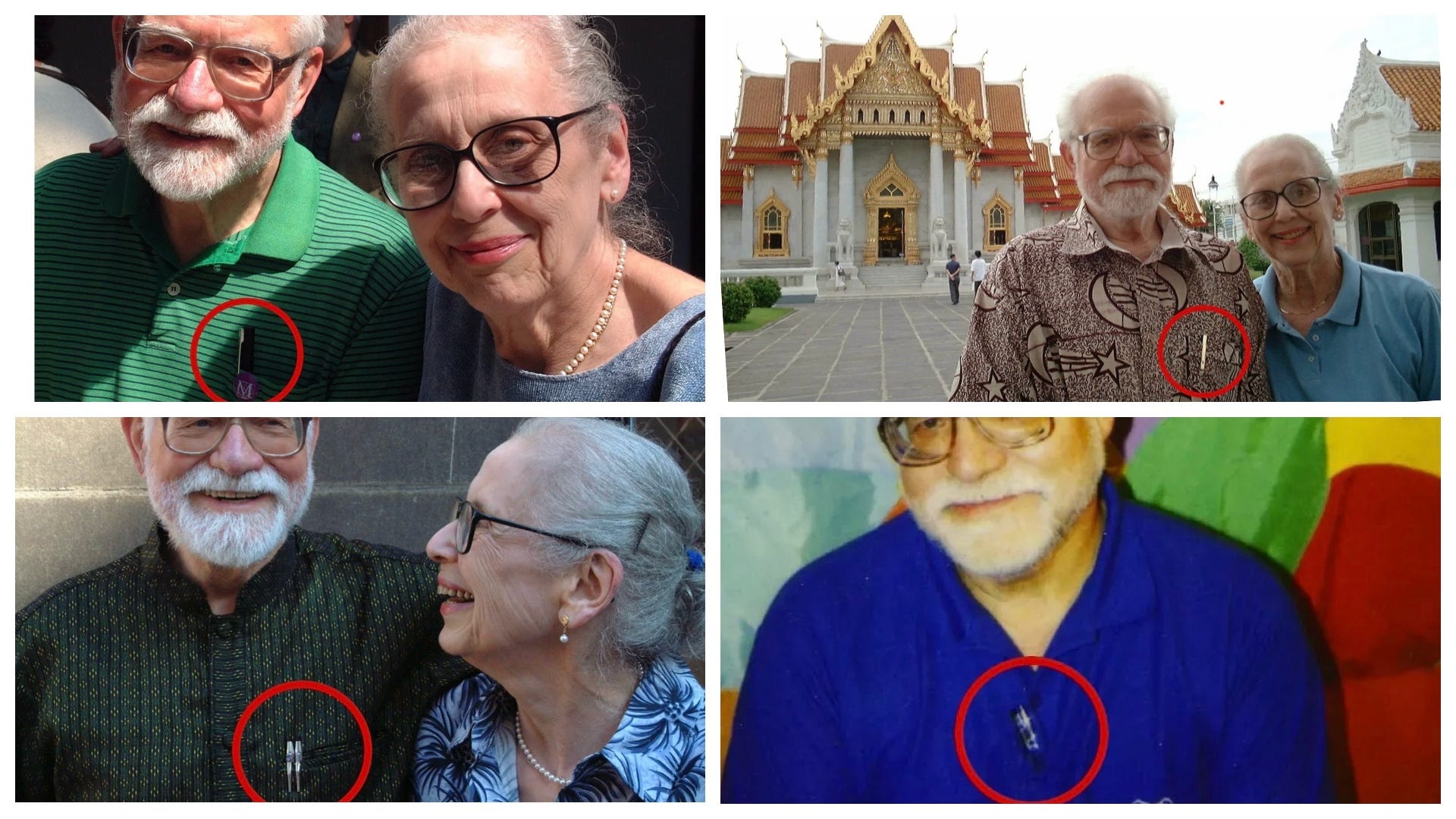
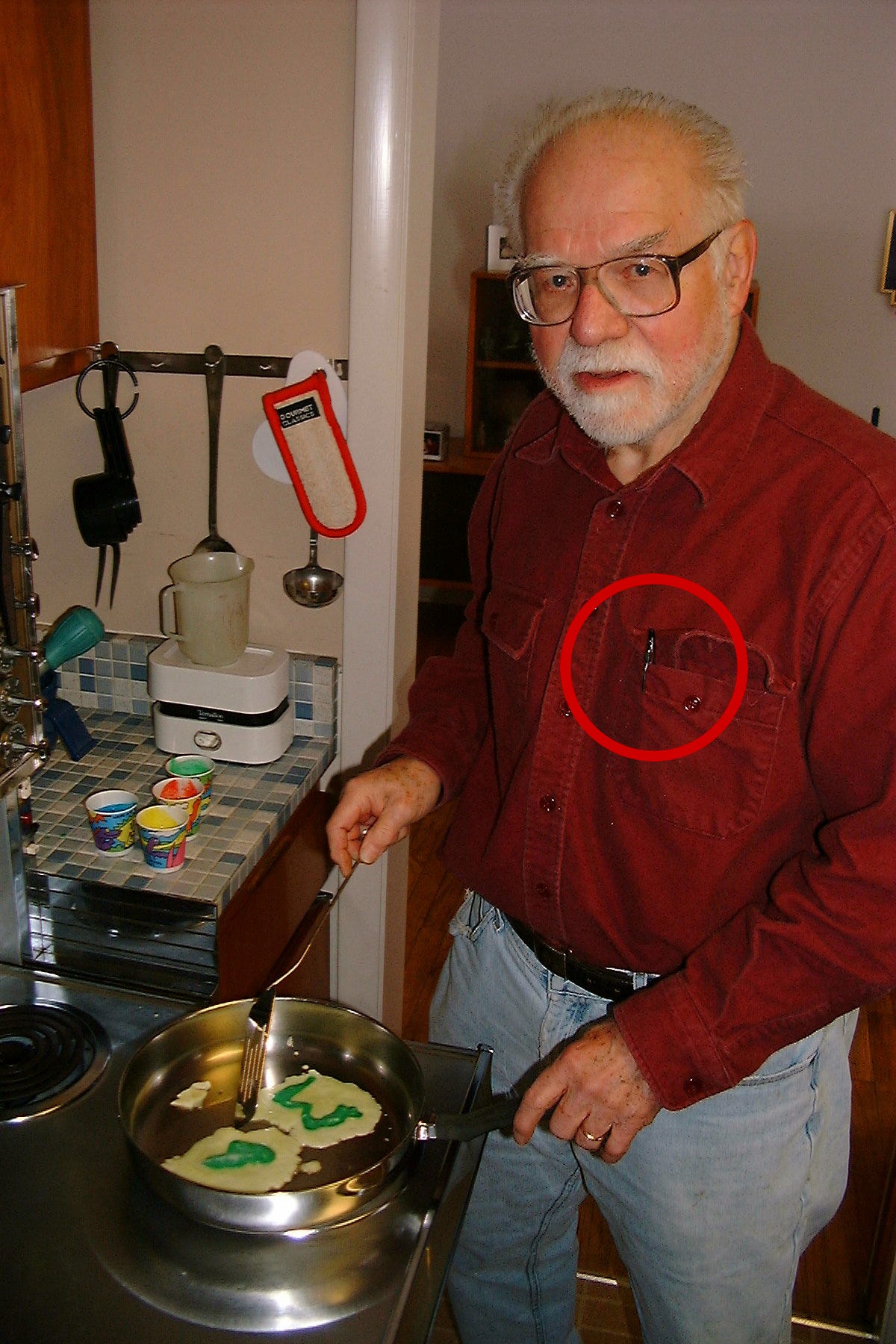
And the pen — well, the pen is a whole lot easier to find. He felt naked if he didn’t have a writing implement with him, a trait that has been visited unto the next generation; of that I and some prematurely inked shirts can attest.
My point here is this: Yes, we’re in a digital era, but — be it notecards and pencil, Notes app in the phone or voice dictation — be ready to capture your ideas at all times. So many of them disappear into the ether, and trying to remember ideas that have slipped sideways JUST enough to be right at the edge of your consciousness but inaccessible can be like, well, juggling monkeys, I suppose.
For any storyteller, making daily efforts to maintain tiny glimpses into what you were pondering, even if only fleetingly, seems table stakes in feeding hunger for good ideas and unexpected connections. Yet so few people do it. I’m glad it’s a habit my dad passed down to me.
And now, Jefferson Airplane.
To Ponder
Where do you keep your random ideas and little bits of string? Any answer will do, as long as you know where to find them.
What is your most fertile time of day for ideas? Where are you at that time? Is there the equivalent of a sheaf of 3x5 cards around?
What other ways can you think of to capture things you don’t want to get lost in the mental sewer system?
Reminds me of my father who sat in his rocking chair and wrote notes in microscopic writing on the same sized notecards as your father.