
Do You Come From A Land Down Under?
A brief note about appetizers and story literacy.


One brief musing about storytelling per day (or, more likely, as frequently as I can muster).
May 9 , 2026
WHY DO I CARE so much about story literacy? I’m still figuring that out day by day, but tonight I thought I’d share an interaction I had with my two boys in 2012, when they were still quite young. It helps explain why I think it’s so important.
It went like this, as recorded in my journal that evening:
5-year-old: Can we move to Australia, Dad?
Me: Why do you want to move to Australia?
5-year-old: Because I’ve never seen it.
Dad: Mom and I liked Australia.
8-year-old: You were in Sydney.
Dad: And we went to the edge of the Outback.
8-year-old: You were at the edge of the Outback Steakhouse?
Dad: Had you ever heard of the Outback before tonight?
8-year-old: No, only the Outback Steakhouse.
I was dumbstruck. I’m rarely dumbstruck. But I suppose it made sense. Why, after all, would they know the Outback as anything but a lightly themed casual dining chain tmlbthat uses Australian tropes to sell slightly above-average fare?
*pauses to Google
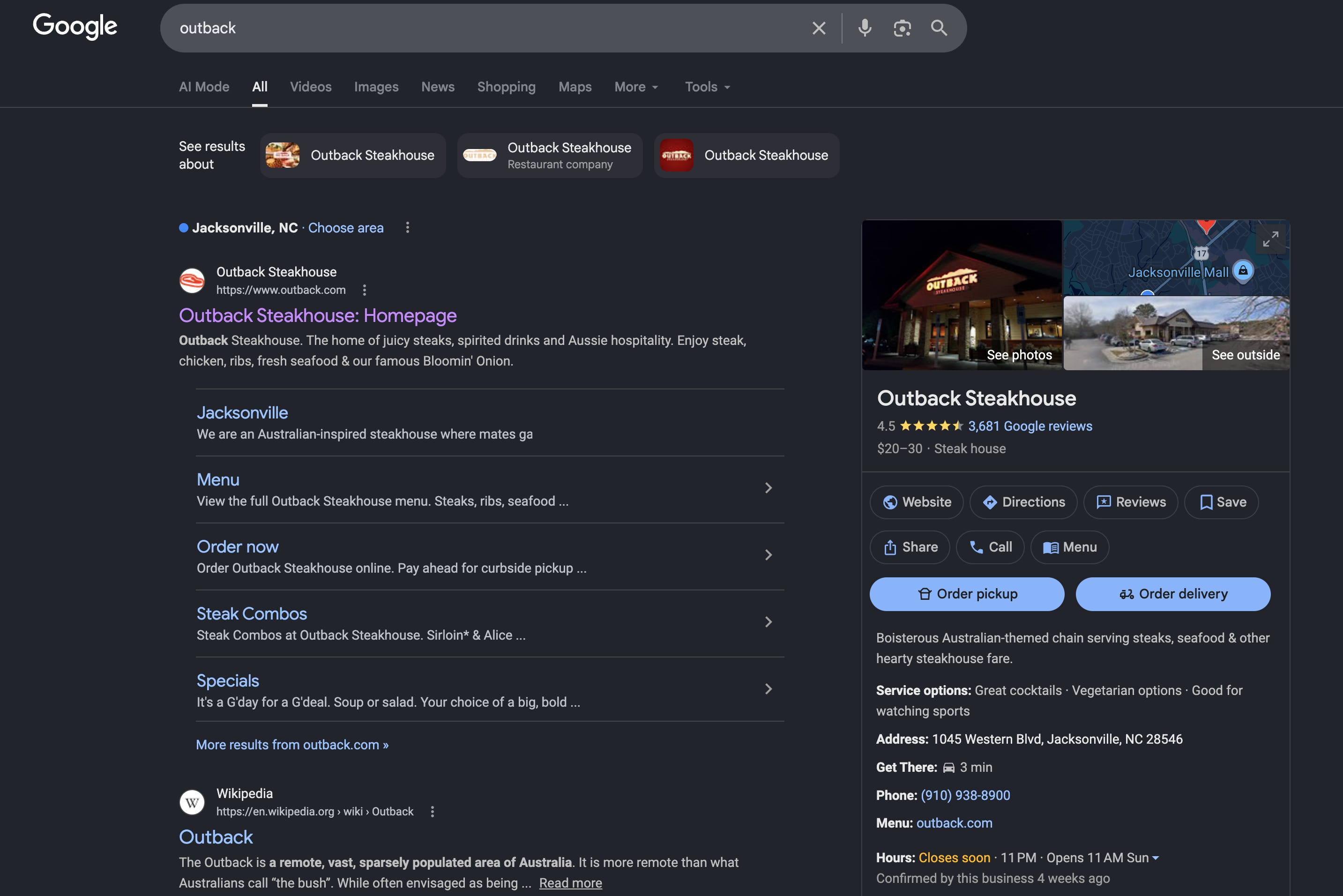
A quick search for “outback” lists, first, not the Australian expanse but the steakhouse. This makes me fret in a manner that reminds me of when, a few years back, I Googled Franz Ferdinand, the Austro-Hungarian archduke whose assassination triggered World War I, and found the first entry to be about … the band Franz Ferdinand. This seems to have rectified itself in 2026, but it’s still somewhat alarming.
Alarming? Hyperbole, you might say. But when vague representations of things — the equivalent of nth-generation photocopies — overwrite the originals because of the endeavors of creative capitalism, it’s worth taking notice.
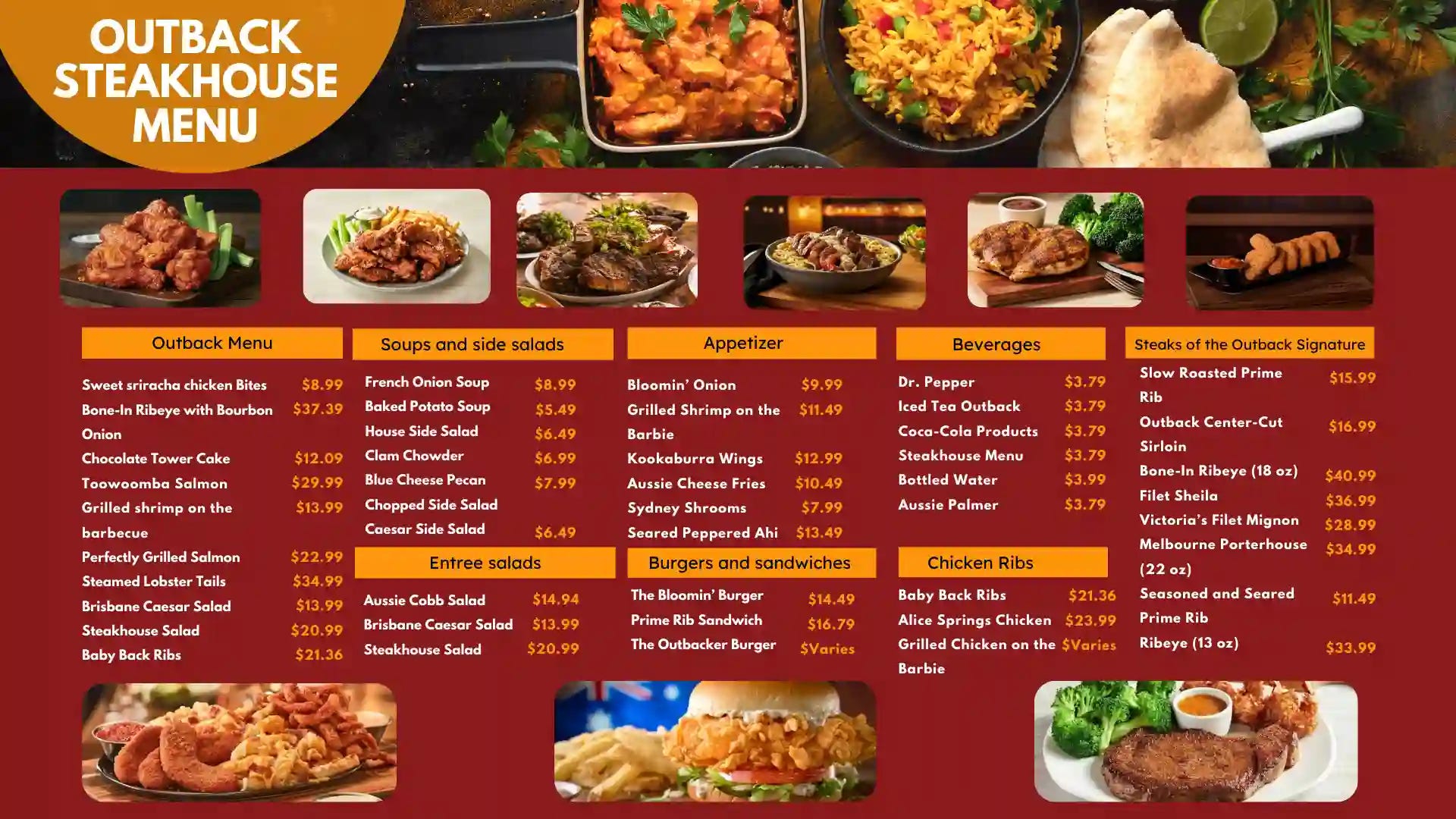
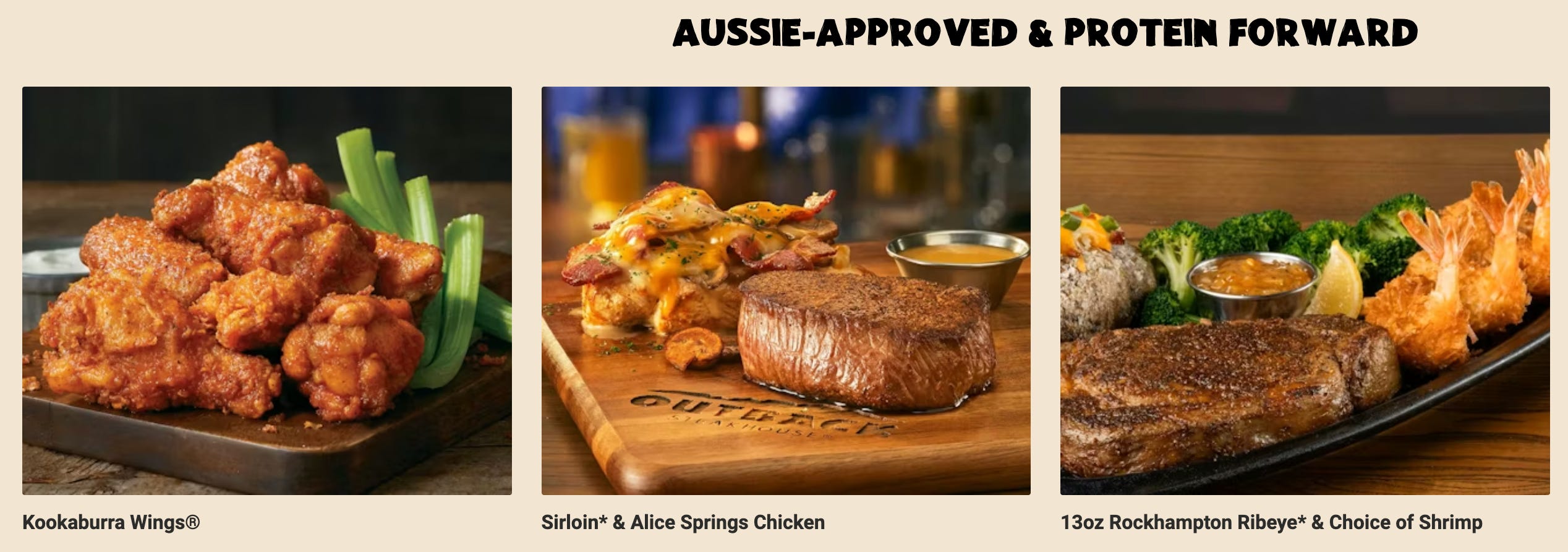
Take Kookaburra wings, for example.
Outback serves them, calling them “Aussie-approved,” or so its menu asserts. In reality, they are simply chicken wings — in fairness, tastier than many chicken wings I’ve had.
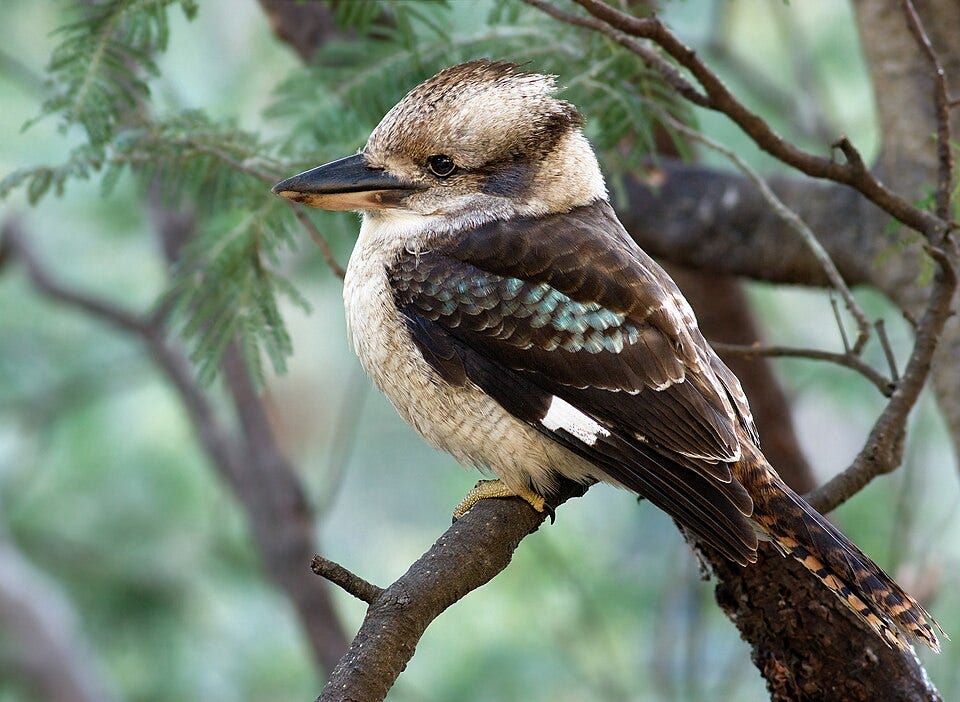
But the actual kookaburra, an Australian bird, is nowhere near the dish. And it’s probably for the best. During the years we went to Outback to eat occasionally, my boys would always agitate for Kookaburra wings at $12.99 a serving. As pictured below, if the wings actually came from a kookaburra, they would be neither plump nor particularly satisfying.
Let’s move on to the Brisbane Caesar salad, which seems to have as much to do with the Australian city of Brisbane as it does with the Roman emperor Caesar (it was invented at Caesar’s restaurant in Tijuana, Mexico, in 1924). And may I mention, too, Alice Springs chicken, whose only apparent connection with the Outback city it references is that it references the Outback city. Chickens, I’ll note, are not native to the Outback. Same, as far as I can see, with the Sydney shrooms and the Melbourne porterhouse.
Finally there’s Foster’s, which despite the years of ads in the United States telling us the word itself was “Australian for beer,” can’t hold a candle to Victoria Bitter there. I have experienced this firsthand in Broken Hill, a mining town on the edge of the Outback where I spent time some years back. “If you walked into a bar in Australia and ordered a Foster's, you might well receive some quizzical looks,” the BBC wrote in 2013. “It's a long way down the popularity list and almost unheard of in some parts of the country.”
To be clear, I don’t blame Outback for any of this. It’s a perfectly fine and often satisfying place to eat. But I wonder about a world in which story — broad-brush, misleading, cartoonish story that reduces a culture into a series of catch-phrases and marketing references — can overwrite the actual truth of a place so completely that my sons had no idea it was even a reference to a real place at all.
This is why we need storytelling literacy. So that our kids don’t grow up thinking of the marketing version of something before the actual cultural version of that something, which is a place where people actually live. Who will speak for the children?
And now, Men at Work.
To Ponder
What other examples of this reductiveness can you think of in the consumer landscape?
Why is it important for kids to understand culture without it being through the lens of marketing?
If someone did this to American culture, what do you think it would look like?
If you’re interested in reading about how everyday life and unusual things shape us, check out my other Substack, Unsorted but Significant:

Eek! As an Australian some of those menu choices are so bizarrely named. I do believe I’ve seen elsewhere that chicken wings in certain places are referred to as Buffalo wings! 😆