
'Crazy'
Notes from the edge. (Guess what: It's not really an edge at all.)

One brief musing about storytelling per day (or, more likely, as frequently as I can muster).
April 9, 2026
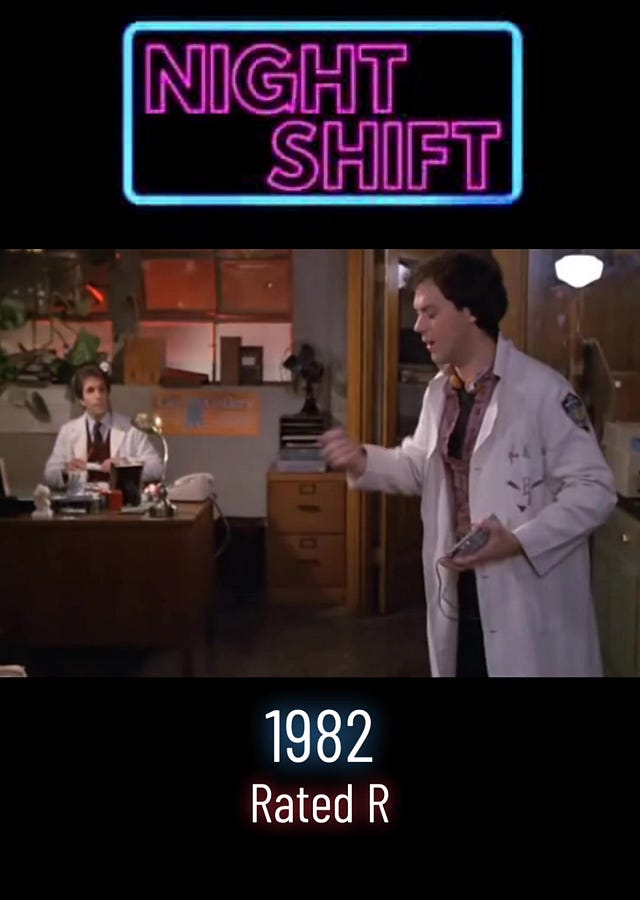
GRANTED, IT ISN’T up there with “Here’s looking at you, kid” or “You had me at hello” or even “Heeeeeere’s Johnnnnnyyyyyy!!!!!” Nevertheless, one throwaway line from a movie — a manic outburst from Michael Keaton in the largely forgotten 1985 Ron Howard comedy “Night Shift” has, against all odds, helped guide my life and my storytelling.
Here it is — blink and it’s done — a microsoliloquy by Keaton’s character, "Blaze" Blazejowski:
 Tiktok failed to load.
Enable 3rd party cookies or use another browser
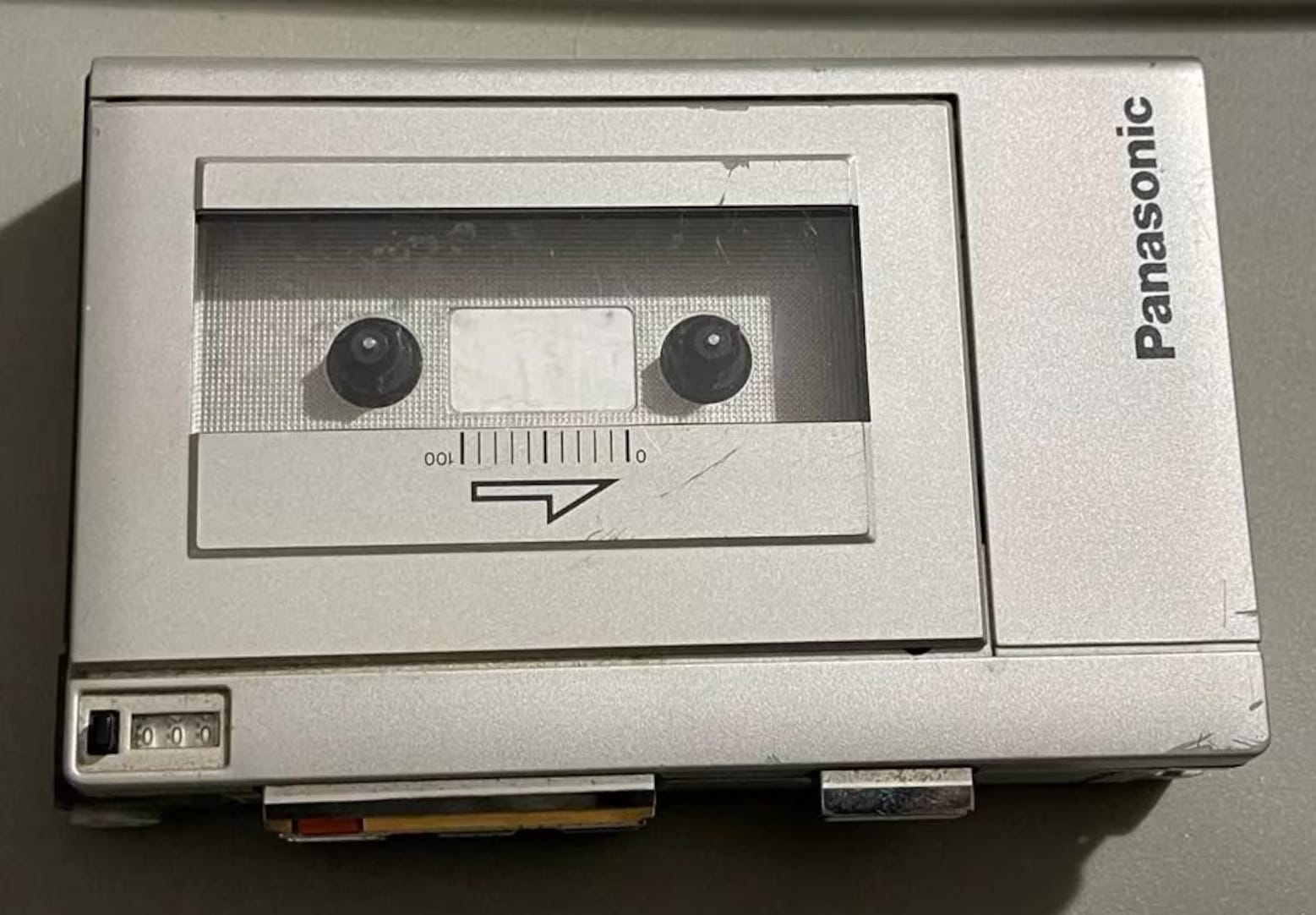
For those of you not watching videos today, here’s a transcript of that momentous quote, part of which was dictated into a portable cassette recorder:
“Tuna fish. What if you mix mayonnaise right in the can with the tuna fish? Hold it. Hold it. Wait a minute, Chuck. Take live tuna fish … and feed ‘em mayonnaise. Oh, this is good. Call StarKist. This is brilliant!”
I mean, c’mon. How can you not like that, particularly if you’re an ADHD 14-year-old in the summer of 1982 whose brain is bursting with stupid little slivers of things.
In the overwhelming information torrent of the early 1980s, I remember seeing this and thinking: Wow! This guy’s got stupid ideas that might be good ideas and he’s not afraid to say them out loud and look silly! He’s got a portable cassette recorder and he’s not afraid to use it!
Of course, this was decades before much of society dictated their notes into small contraptions in their hands. Apparently we’ve realized more than we used to that tiny fragments might be worth saving.
THE POINT, THOUGH, stands. Many “crazy” ideas may not be so crazy.
Articulated, captured, discussed, workshopped — they can become momentous works now and then. I truly believe that the craziest thing in storytelling these days is simply to stand still.
Nevertheless, I live in the real world. There, shortly after I first started in journalism, an editor told me when I wrote a lede that he didn’t like: “That’s too creative.” (I’m not saying my lede was great, but what a thing for an editor to say.)
So I have long softened potentially transgressive ideas out of fear they’ll get slapped down. I’ll start sentences with, “This is a crazy idea, but …” and I was even once heard pitching an idea by saying, “Hear me out.” (That is sad and not recommended.)
Newsrooms need to not eye-roll and slap down unorthodox ideas. While standards and accuracy are never to be compromised, duh, sometimes we’ll do something and it won’t work — and we’ll learn from it and tell a better story next time.
The good news is I think the industry is improving at that. To me, the best conversations with colleagues these days start like this:
“What if we …”
“Let’s try …”
“OK. Is this weird?”
“Got a minute? I have a story idea that might sound crazy.” (my favorite)
My all-time favorite college professor, historian Jackson Spielvogel at Penn State, once spent almost half the semester in a historiography course teaching us about one of the most important concepts I’ve ever come across.
Not only are there rational and irrational things, he taught, but there are also nonrational things. Whereas “irrational” in most cases means not rational as in “chaotic and kind of nuts,” the term “nonrational” points toward actions or decisions that simply are not made on a purely rational basis. That includes intuition, “gut feelings” and the like — messages your mind or body sends that may not make empirical sense when analyzed but that often turn out to be the best course of action.
That nonrational space is where, I’ve found, some of the best ideas lie. So if you think your own idea is “crazy” or unworkable, articulate it — to your phone, to another human or even just write it down. Take it apart. Put it back together. Ponder. I bet you’ll find that half the time, it’s not so crazy after all.
And now, Patsy Cline.
To Ponder
Count how many ideas you’ve never pitched or even talked about because you were worried they would sound “crazy” or “stupid.” You may use your toes as well as fingers.
Do you know of any famous stories that were rejected as being too weird at first but then succeeded? What might you learn from such cases?
How do you capture your ideas before they’re lost in the ether?
(I’ve deleted the extra Michael Keaton item here after being alerted that I am likely remembering it wrong.)
If you’re interested in reading about how everyday life and unusual things shape us, check out my other Substack, Unsorted but Significant:
